
Event research Gov Ball After Dark – Confidence Man DJ SET
Gov Ball After Dark – Confidence Man DJ SET tickets are on sale right now.
Are Gov Ball After Dark – Confidence Man DJ SET tickets likely to be profitable in New York, NY?
There are 0 presales for this event.
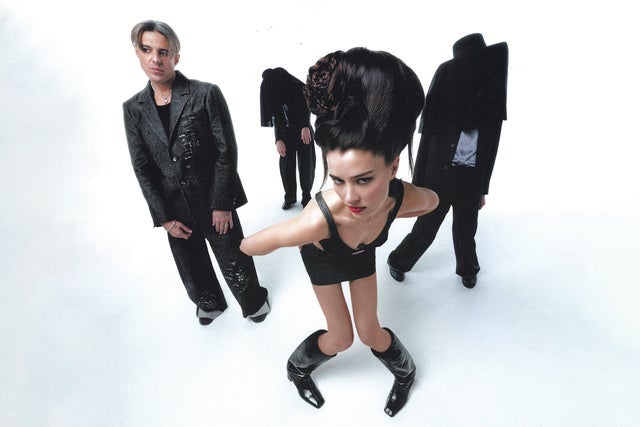
Gov Ball After Dark – Confidence Man DJ SET
Night Club 101
New York, NY
Jun 5 Fri • 2026 • 10:30pm
Rock and Pop | Festivals | Rock
Ai Ticket Reselling Prediction
Sign Up to get artificial intelligence powered ticket reselling predictions!
Using artificial intelligence, concert attendance stats, and completed sales history for ticket prices on secondary market sites like Stubhub, we can predict whether this event is hot for resale. The Ai also considers factors like what music genre, and what market the concert is in.


Shazam is a music app that helps you identify the music playing around you. The more times an artist gets Shazamed, the higher this score will be, which should give you an idea of the popularity of this artist. Scores are ranked on a scale of 1 to 5. Learn more

Google Trends shows how popular a search query is for an artist. The more popular the artist is and the more people that are Googling them, the higher this score will be. Scores are ranked on a scale of 1 to 5. Learn more
100
Capacity
Gov Ball After Dark – Confidence Man DJ SET at the Night Club 101, New York, NY
Tour Schedule
Gov Ball After Dark – Confidence Man DJ SET
5 similar events found
| Event Date | Event | Venue | Capacity | Location | Report |
|---|---|---|---|---|---|
| Jun 5 Fri • 2026 • 11:00am | The Governors Ball Music Festival | Flushing Meadows Park | Queens, NY |  |
|
| Jun 5 Fri • 2026 • 10:30pm | Gov Ball After Dark – Confidence Man DJ SET | Night Club 101 |
|
New York, NY | |
| Jun 13 Sat • 2026 • 12:00pm | Bonnaroo Music + Arts Festival | Great Stage Park |
|
Manchester, TN | |
| Aug 1 Sat • 2026 • 2:00pm | HARD Summer Music Festival | Hollywood Park Grounds | Inglewood, CA | |
|
| Oct 16 Fri • 2026 • 6:00pm | Sammy Virji w/ Confidence Man | Red Rocks Amphitheatre |
|
Morrison, CO | |
Watch on YouTube
Listen on iTunes
Wikipedia Bio
 First edition title page | |
| Author | Herman Melville |
|---|---|
| Language | English |
| Genre | Satirical novel, philosophical novel |
| Published | 1857 |
| Publisher | Dix, Edwards & Co. |
| Publication place | United States |
| Media type | |
| Preceded by | The Piazza Tales |
| Followed by | Battle-Pieces and Aspects of the War |
The Confidence-Man: His Masquerade, first published in New York on April Fool's Day 1857, is the ninth and final novel by American writer Herman Melville. The work was published on the exact day of the novel's setting. Centered on the title character, The Confidence-Man portrays a group of steamboat passengers travelling on the Mississippi River toward New Orleans. The narrative follows a succession of confidence men who, as suggested by the book's title, may be the same man in disguise. The confidence man uses various methods of persuasion to sell patent medicine, encourage speculation in fraudulent business, donate to non-existent charities, and other cons. In the latter part of the narrative, the confidence man discusses friendship and other topics with the other passengers. Interspersed with the dialogues are other texts: essay, short story, ode, and others. These additional texts inspire the reader to consider the difference between fiction and reality.
When the novel was first released, critical reception acknowledged its metaphysical angle, while criticizing its cynical point of view. Many reviewers seem not to have understood that the title hinted that one man was represented in multiple disguises and that the book criticized Christianity. Elizabeth Foster's introduction to the 1954 edition summarized the critical analysis already done and spurred further study of the work.[1] Since then, critics have praised the work for its postmodern sensibilities, like how the confidence man both hides and reveals truth. Literary analysts have described the novel as a satire or allegory, with a possible typological reading of the work. The use of tropes from pantomime suggests that characters are fulfilling stereotyped roles. Melville based some of the characters on real-life people. The inclusion of multiple genres of writing is reminiscent of literary magazines of the day, tapping into journalistic uncertainty about the fiction and non-fiction status of the work. One of Melville's biographers stated that the reason for the many genres in the novel is that Melville lengthened it with previously-rejected works. The novel includes religious themes and shows how an economy that assumes generosity must adapt when characters like the confidence man take advantage of those assumptions. Stories within the novel address racial conflict between Indians and white settlers and illustrate how racist stories are removed from firsthand accounts from Indians.
- ^ Seltzer, Leon F. (March 1967). "Camus's Absurd and the World of Melville's Confidence-Man". PMLA. 82 (1): 14–27. doi:10.2307/461042. JSTOR 461042.
Source: Wikipedia