
Event research Funk For Forest
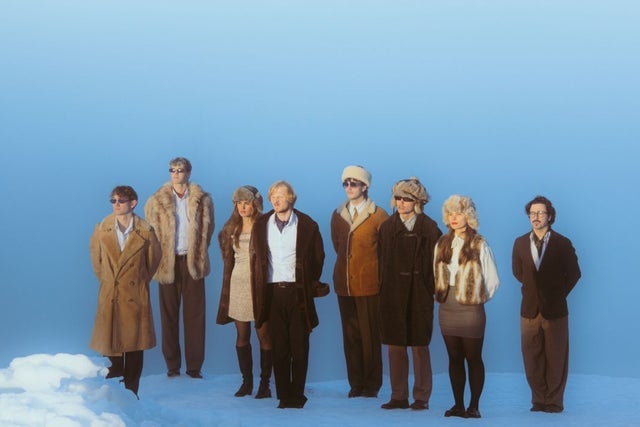
Funk For Forest tickets are on sale right now.
Are Funk For Forest tickets likely to be profitable in Oslo?
There are 0 presales for this event.

Ai Ticket Reselling Prediction
Sign Up to get artificial intelligence powered ticket reselling predictions!
Using artificial intelligence, concert attendance stats, and completed sales history for ticket prices on secondary market sites like Stubhub, we can predict whether this event is hot for resale. The Ai also considers factors like what music genre, and what market the concert is in.

Shazam is a music app that helps you identify the music playing around you. The more times an artist gets Shazamed, the higher this score will be, which should give you an idea of the popularity of this artist. Scores are ranked on a scale of 1 to 5. Learn more

Google Trends shows how popular a search query is for an artist. The more popular the artist is and the more people that are Googling them, the higher this score will be. Scores are ranked on a scale of 1 to 5. Learn more
500
Capacity
Funk For Forest at the Parkteatret Scene, Oslo, Oslo
Tour Schedule
Funk For Forest
39 similar events found
| Event Date | Event | Venue | Capacity | Location | Report |
|---|---|---|---|---|---|
| May 6 Wed • 2026 • 7:00pm | Cherrie | Parkteatret Scene, Oslo |

|
Oslo |  |
| May 8 Fri • 2026 • 8:00pm | SULT - Slippkonsert | Parkteatret Scene, Oslo |
|
Oslo | |
| May 9 Sat • 2026 • 8:00pm | Funk For Forest | Parkteatret Scene, Oslo |
|
Oslo | |
| May 16 Sat • 2026 • 7:00pm | Snor | Parkteatret Scene, Oslo |
|
Oslo | |
| May 22 Fri • 2026 • 8:00pm | Wold Wiggen - Slippkonsert | Parkteatret Scene, Oslo |
|
Oslo | |
| Pro Members see all 39 upcoming events on the tour schedule. | |||||
Watch on YouTube
Listen on iTunes
Wikipedia Bio

Funk art is an American art movement that was a reaction against the nonobjectivity of abstract expressionism.[1] An anti-establishment movement, Funk art brought figuration back as subject matter in painting again rather than limiting itself to the non-figurative, abstract forms that abstract expressionists such as Jackson Pollock and Mark Rothko were depicting. The movement's name was derived from the jazz musical term "funky", describing the passionate, sensuous, and quirky. During the 1920s, jazz was thought of as very basic, unsophisticated music, and many people believed Funk was an unrefined style of art as well.[2] The term funk also had negative connotations because the word had an association with a foul odor.[3] Throughout the 1960s and 1970s, Funk was a popular art form, mainly in California's Bay Area in the United States. Although discussed as a cohesive movement, Funk artists did not feel as if they belonged to a collective art style or group.[4] This is because while its artists shared the same attitudes and created similar works, they were not necessarily working together.[2]
- ^ Cite error: The named reference
Selzwas invoked but never defined (see the help page). - ^ a b Cite error: The named reference
Albrightwas invoked but never defined (see the help page). - ^ Cite error: The named reference
Shieldswas invoked but never defined (see the help page). - ^ Karlstrom, Paul J. Peter Selz: Sketches of a Life in Art. Berkeley: University of California Press, 2012.
Source: Wikipedia