
Event research The Lord of the Rings - The Two Towers - In Concert
The Lord of the Rings - The Two Towers - In Concert tickets are on sale right now.
Are The Lord of the Rings - The Two Towers - In Concert tickets likely to be profitable in Edmonton, AB?
There is 1 presale for this event - we have 1 unique password for this presale.
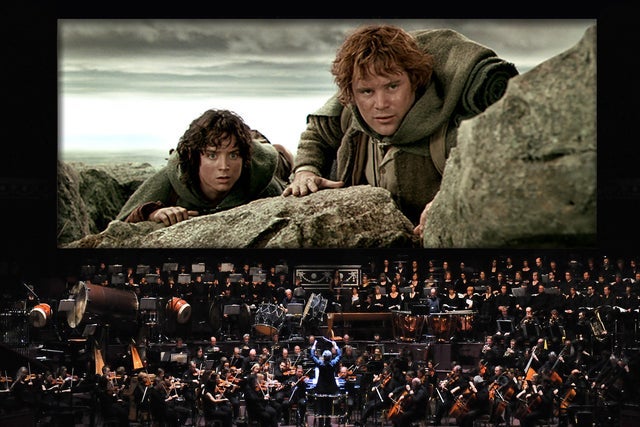
The Lord of the Rings - The Two Towers - In Concert
Northern Alberta Jubilee Auditorium
Edmonton, AB
Sep 12 Sat • 2026 • 1:00pm
Movies | Action/Adventure
Ai Ticket Reselling Prediction
Sign Up to get artificial intelligence powered ticket reselling predictions!
Using artificial intelligence, concert attendance stats, and completed sales history for ticket prices on secondary market sites like Stubhub, we can predict whether this event is hot for resale. The Ai also considers factors like what music genre, and what market the concert is in.

Shazam is a music app that helps you identify the music playing around you. The more times an artist gets Shazamed, the higher this score will be, which should give you an idea of the popularity of this artist. Scores are ranked on a scale of 1 to 5. Learn more

Google Trends shows how popular a search query is for an artist. The more popular the artist is and the more people that are Googling them, the higher this score will be. Scores are ranked on a scale of 1 to 5. Learn more

2,515
Capacity
The Lord of the Rings - The Two Towers - In Concert at the Northern Alberta Jubilee Auditorium, Edmonton, AB
 Presale
Tour Schedule
The Lord of the Rings - The Two Towers - In Concert
9 similar events found
| Event Date | Event | Venue | Capacity | Location | Report |
|---|---|---|---|---|---|
| Aug 28 Fri • 2026 • 7:30pm | The Lord of the Rings - The Two Towers - In Concert | Southern Alberta Jubilee Auditorium |

|
Calgary, AB |  |
| Aug 29 Sat • 2026 • 1:00pm | The Lord of the Rings - The Two Towers - In Concert | Southern Alberta Jubilee Auditorium |
|
Calgary, AB | |
| Aug 29 Sat • 2026 • 7:00pm | The Lord of the Rings - The Two Towers - In Concert | Southern Alberta Jubilee Auditorium |
|
Calgary, AB | |
| Sep 11 Fri • 2026 • 7:30pm | The Lord of the Rings - The Two Towers - In Concert | Northern Alberta Jubilee Auditorium |
|
Edmonton, AB | |
| Sep 12 Sat • 2026 • 1:00pm | The Lord of the Rings - The Two Towers - In Concert | Northern Alberta Jubilee Auditorium |
|
Edmonton, AB | |
| Pro Members see all 9 upcoming events on the tour schedule. | |||||
Watch on YouTube
Listen on iTunes
Wikipedia Bio
| The Lord of the Rings: The Two Towers | |
|---|---|
 Theatrical release poster | |
| Directed by | Peter Jackson |
| Screenplay by |
|
| Based on | |
| Produced by |
|
| Starring | |
| Cinematography | Andrew Lesnie |
| Edited by | Michael J. Horton |
| Music by | Howard Shore |
Production companies | |
| Distributed by | New Line Cinema[1] |
Release dates |
|
Running time | 179 minutes[2] |
| Countries | |
| Language | English |
| Budget | $94 million[3][4] |
| Box office | $945.1 million[3] |
The Lord of the Rings: The Two Towers is a 2002 epic fantasy film directed by Peter Jackson from a screenplay by Fran Walsh, Philippa Boyens, Stephen Sinclair, and Jackson, based on 1954's The Two Towers, the second volume of the novel The Lord of the Rings by J. R. R. Tolkien. The sequel to 2001's The Lord of the Rings: The Fellowship of the Ring, the film is the second instalment in The Lord of the Rings trilogy. It features an ensemble cast including Elijah Wood, Ian McKellen, Liv Tyler, Viggo Mortensen, Sean Astin, Cate Blanchett, John Rhys-Davies, Bernard Hill, Christopher Lee, Billy Boyd, Dominic Monaghan, Orlando Bloom, Hugo Weaving, Miranda Otto, David Wenham, Brad Dourif, Karl Urban, and Andy Serkis. Continuing the plot of the previous film, it intercuts three storylines: Frodo and Sam continue their journey toward Mordor to destroy the One Ring, now allied with Gollum, the ring's untrustworthy former bearer. Merry and Pippin escape their orc captors, meet Treebeard the Ent, and help to plan an attack on Isengard, the fortress of Sauron's vassal, the treacherous wizard Saruman. Aragorn, Legolas, and Gimli come to the war-torn nation of Rohan and are reunited with the resurrected Gandalf, before joining king Théoden to fight Saruman's army at the Battle of Helm's Deep.
The Two Towers was financed and distributed by American studio New Line Cinema, but filmed and edited entirely in Jackson's native New Zealand, concurrently with the other two parts of the trilogy. It premiered on 5 December 2002 at the Ziegfeld Theatre in New York City and was then released on 18 December in the United States and on 19 December in New Zealand. The film was acclaimed by critics and audiences, who considered it a landmark in filmmaking and an achievement in the fantasy film genre, with praise for the visual effects (particularly Gollum), performances, action sequences, direction, and musical score. It grossed $923 million worldwide during its original theatrical run, making it the highest-grossing film of 2002 and, at the time of its release, the third-highest-grossing film of all time behind Titanic and Harry Potter and the Philosopher's Stone.[5] Following subsequent re-releases, it has grossed $944 million.[3]
Like the other films in the trilogy, The Two Towers is widely recognised as one of the greatest and most influential films ever made as well as one of the greatest sequels in cinema history. The film received numerous accolades; at the 75th Academy Awards, it was nominated for six awards, including Best Picture, winning for Best Sound Editing and Best Visual Effects. The final instalment of the trilogy, The Return of the King, was released in 2003.
- ^ a b c d e "The Lord of the Rings: The Two Towers". AFI Catalog of Feature Films. Archived from the original on 12 May 2019. Retrieved 28 December 2018.
- ^ "The Lord of the Rings - The Two Towers". British Board of Film Classification. Archived from the original on 21 March 2018. Retrieved 2 May 2019.
- ^ a b c Cite error: The named reference
BOMwas invoked but never defined (see the help page). - ^ "The Lord of the Rings: The Two Towers (2002)". The Numbers. Nash Information Services, LLC. Retrieved 20 January 2026.
- ^ "2002 Worldwide Box Office". Box Office Mojo. Retrieved 13 March 2024.
Source: Wikipedia