
Event research Carolina Ballet Presents Beauty And The Beast
Carolina Ballet Presents Beauty And The Beast tickets are on sale right now.
Are Carolina Ballet Presents Beauty And The Beast tickets likely to be profitable in Raleigh, NC?
There are 0 presales for this event.
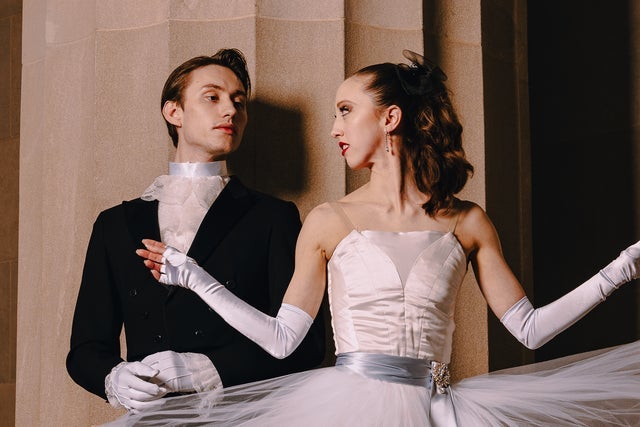
Carolina Ballet Presents Beauty And The Beast
Martin Marietta Center for the Performing Arts
Raleigh, NC
May 16 Sat • 2026 • 2:00pm
Ballet and Dance | More Arts and Theater | Ballet & Dance | Dance | Musicals | Children's Music and Theater | Movies | Family Attractions | Theater | Family | Musical | Film Festivals
Ai Ticket Reselling Prediction
Sign Up to get artificial intelligence powered ticket reselling predictions!
Using artificial intelligence, concert attendance stats, and completed sales history for ticket prices on secondary market sites like Stubhub, we can predict whether this event is hot for resale. The Ai also considers factors like what music genre, and what market the concert is in.

Shazam is a music app that helps you identify the music playing around you. The more times an artist gets Shazamed, the higher this score will be, which should give you an idea of the popularity of this artist. Scores are ranked on a scale of 1 to 5. Learn more

Google Trends shows how popular a search query is for an artist. The more popular the artist is and the more people that are Googling them, the higher this score will be. Scores are ranked on a scale of 1 to 5. Learn more

1,705
Capacity
Carolina Ballet Presents Beauty And The Beast at the Martin Marietta Center for the Performing Arts, Raleigh, NC
Tour Schedule
Carolina Ballet Presents Beauty And The Beast
5 similar events found
| Event Date | Event | Venue | Capacity | Location | Report |
|---|---|---|---|---|---|
| May 14 Thu • 2026 • 7:30pm | Carolina Ballet Presents Beauty And The Beast | Martin Marietta Center for the Performing Arts |

|
Raleigh, NC |  |
| May 15 Fri • 2026 • 7:30pm | Carolina Ballet Presents Beauty And The Beast | Martin Marietta Center for the Performing Arts |
|
Raleigh, NC | |
| May 16 Sat • 2026 • 2:00pm | Carolina Ballet Presents Beauty And The Beast | Martin Marietta Center for the Performing Arts |
|
Raleigh, NC | |
| May 16 Sat • 2026 • 7:30pm | Carolina Ballet Presents Beauty And The Beast | Martin Marietta Center for the Performing Arts |
|
Raleigh, NC | |
| May 17 Sun • 2026 • 2:00pm | Carolina Ballet Presents Beauty And The Beast | Martin Marietta Center for the Performing Arts |
|
Raleigh, NC | |
Watch on YouTube
Listen on iTunes
Wikipedia Bio
| "Beauty and the Beast"(La Belle et la Bête) | |
|---|---|
 Beauty releases the prince from his beastly curse. Artwork from Europa's Fairy Book, by John Batten. | |
| Folk tale | |
| Name | "Beauty and the Beast"(La Belle et la Bête) |
| Also known as | French: La Belle et la BêteItalian: La Bella e la BestiaLatin: Bellă et Bēstia or Fōrmōsa et BēstiaSpanish: La Bella y la BestiaPortuguese: A Bela e o Monstro (in Portugal), A Bela e a Fera (in Brazil), or A Bela e a Besta (in literal Portuguese)German: Die Schöne und das BiestDutch: Belle en het Beest or De Schone en het Beest |
| Aarne–Thompson grouping | ATU 425C (Beauty and the Beast) |
| Region | France |
| Published in | La Jeune Américaine et les contes marins (1740), by Gabrielle-Suzanne Barbot de Villeneuve; Magasin des enfants (1756), by Jeanne-Marie Leprince de Beaumont |
| Related | Cupid and Psyche (ATU 425B)East of the Sun and West of the Moon (ATU 425A) |
"Beauty and the Beast" is a fairy tale written by the French novelist Gabrielle-Suzanne Barbot de Villeneuve and published anonymously in 1740 in La Jeune Américaine et les contes marins (The Young American and Marine Tales).[1][2]
Villeneuve's original story was abridged, revised, and published by French novelist Jeanne-Marie Leprince de Beaumont in 1756 in Magasin des enfants[3] (Children's Collection) which became the most commonly retold version.[4] Later, Andrew Lang retold the story in Blue Fairy Book, a part of the Fairy Book series, in 1889.[5] The fairy-tale was influenced by the story of Petrus Gonsalvus[6] as well as Ancient Latin stories such as "Cupid and Psyche" from The Golden Ass, written by Lucius Apuleius Madaurensis in the second century AD, and "The Pig King", an Italian fairy-tale published by Giovanni Francesco Straparola in The Facetious Nights of Straparola around 1550.[7]
Variants of the tale are known across Europe.[8] In France, for example, Zémire and Azor is an operatic version of the story, written by Jean-François Marmontel and composed by André Grétry in 1771, which had enormous success into the 19th century.[9] Zémire and Azor is based on the second version of the tale. Amour pour amour (Love for Love) by Pierre-Claude Nivelle de La Chaussée is a 1742 play based on de Villeneuve's version. According to researchers at a university in Lisbon, the story originated about 4,000 years ago.[10][11]
- ^ Zipes, Jack (5 July 2002). Breaking the Magic Spell: Radical Theories of Folk & Fairy Tales (Revised and expanded ed.). Lexington, Kentucky: University Press of Kentucky. p. 10. ISBN 9780813190303. Retrieved 10 July 2021.
- ^ Windling, Terri (April 2010). "Introduction". In Datlow, Ellen; Windling, Terri (eds.). The Beastly Bride: Tales of the Animal People. Penguin Group. ISBN 9781101186176. Retrieved 13 July 2021.
- ^ Stouff, Jean (2014). "La Belle et la Bête". Biblioweb. doi:10.58079/lz7q.
- ^ Ziolkowski, Jan M. (2009). Fairy Tales from Before Fairy Tales: The Medieval Latin Past of Wonderful Lies. University of Michigan Press. p. 209. ISBN 9780472025220. Retrieved 10 July 2021.
- ^ Bacchilega, Cristina (1997). Postmodern Fairy Tales: Gender and Narrative Strategies. Philadelphia: University of Pennsylvania Press. p. 169. ISBN 9780812200638. Retrieved 10 July 2021.
- ^ Kruse, Carl (5 July 2021). "Variations of Beauty and the Beast". Carl Kruse. Retrieved 29 February 2024.
- ^ Harrison, "Cupid and Psyche", Oxford Encyclopedia of Ancient Greece and Rome, p. 339.
- ^ Heidi Anne Heiner, "Tales Similar to Beauty and the Beast Archived 4 March 2022 at the Wayback Machine"
- ^ Thomas, Downing. Aesthetics of Opera in the Ancien Régime, 1647–1785. Cambridge: Cambridge UP, 2002.
- ^ da Silva, Sara Graça; Tehrani, Jamshid J. (1 January 2016). "Comparative phylogenetic analyses uncover the ancient roots of Indo-European folktales". Royal Society Open Science. 3 (1) 150645. Bibcode:2016RSOS....350645D. doi:10.1098/rsos.150645. PMC 4736946. PMID 26909191.
- ^ Sedgwick, Marcus (5 February 2020). "Wolves and lies: a writer's perspective". In Bill Hughes, Bill; George, Sam (eds.). In the Company of Wolves: Werewolves, Wolves and Wild Children. Manchester University Press. ISBN 9781526129055. Retrieved 12 July 2020.
Source: Wikipedia