
Event research Villanelle
Villanelle tickets are on sale right now.
Are Villanelle tickets likely to be profitable in San Diego, CA?
There are 0 presales for this event.
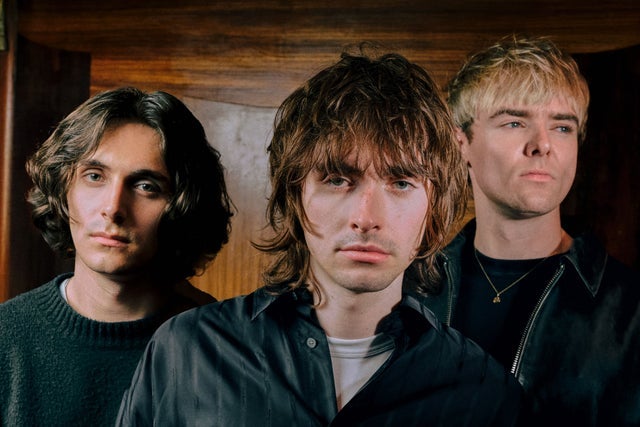
Villanelle
Voodoo Room at the House of Blues San Diego
San Diego, CA
Jul 27 Mon • 2026 • 7:00pm
Metal | Rock
Ai Ticket Reselling Prediction
Sign Up to get artificial intelligence powered ticket reselling predictions!
Using artificial intelligence, concert attendance stats, and completed sales history for ticket prices on secondary market sites like Stubhub, we can predict whether this event is hot for resale. The Ai also considers factors like what music genre, and what market the concert is in.

Shazam is a music app that helps you identify the music playing around you. The more times an artist gets Shazamed, the higher this score will be, which should give you an idea of the popularity of this artist. Scores are ranked on a scale of 1 to 5. Learn more

Google Trends shows how popular a search query is for an artist. The more popular the artist is and the more people that are Googling them, the higher this score will be. Scores are ranked on a scale of 1 to 5. Learn more
1,000
Capacity
Villanelle at the Voodoo Room at the House of Blues San Diego, San Diego, CA
Tour Schedule
Villanelle
6 similar events found
| Event Date | Event | Venue | Capacity | Location | Report |
|---|---|---|---|---|---|
| Sep 19 Sat • 2026 • 4:00pm | Shaky Knees Music Festival | PIEDMONT PARK |

|
Atlanta, GA |  |
| Sep 19 Sat • 2026 • 11:59pm | Shaky Knees Presents: Villanelle | Vinyl |
|
Atlanta, GA | |
| Sep 27 Sun • 2026 • 12:00pm | Ohana Festival | Doheny State Beach | Dana Point, CA | |
|
| Nov 17 Tue • 2026 • 7:30pm | Villanelle | King Tuts Wah Wah Hut |
|
Glasgow | |
| Nov 19 Thu • 2026 • 7:00pm | Villanelle | Manchester Gorilla |
|
Manchester | |
| Pro Members see all 6 upcoming events on the tour schedule. | |||||
Watch on YouTube
Listen on iTunes
Wikipedia Bio

A villanelle, also known as villanesque,[1] is a nineteen-line poetic form consisting of five tercets followed by a quatrain. There are two refrains and two repeating rhymes, with the first and third lines of the first tercet repeated alternately at the end of each subsequent stanza until the last stanza, which includes both repeated lines. The villanelle is an example of a fixed verse form. The word derives from Latin, then Italian, and is related to the initial subject of the form being the pastoral.
The form started as a simple ballad-like song with no fixed form; this fixed quality would only come much later, from the poem "Villanelle (J'ay perdu ma Tourterelle)" (1606) by Jean Passerat. From this point, its evolution into the "fixed form" used in the present day is debated. Despite its French origins, the majority of villanelles have been written in English, a trend which began in the late nineteenth century. The villanelle has been noted as a form that frequently treats the subject of obsessions, and one which appeals to outsiders; its defining feature of repetition prevents it from having a conventional tone.
- ^ Kastner 1903 p. 279
Source: Wikipedia