
Event research Netflix Is A Joke Presents: Troy Hawke
Netflix Is A Joke Presents: Troy Hawke tickets are on sale right now.
Are Netflix Is A Joke Presents: Troy Hawke tickets likely to be profitable in Los Angeles, CA?
There are 0 presales for this event.
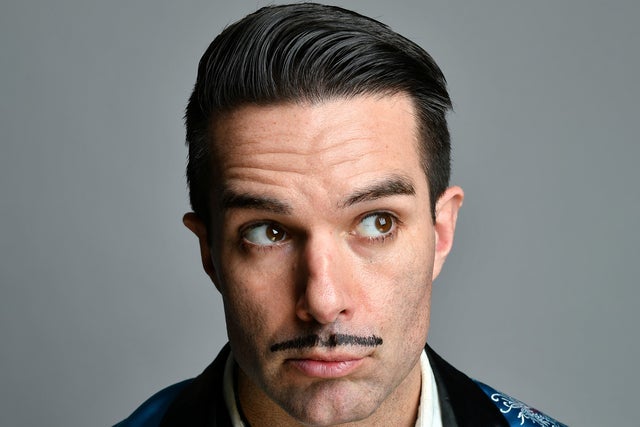
Netflix Is A Joke Presents: Troy Hawke
Lyric Hyperion
Los Angeles, CA
May 7 Thu • 2026 • 9:30pm
Comedy
Ai Ticket Reselling Prediction
Sign Up to get artificial intelligence powered ticket reselling predictions!
Using artificial intelligence, concert attendance stats, and completed sales history for ticket prices on secondary market sites like Stubhub, we can predict whether this event is hot for resale. The Ai also considers factors like what music genre, and what market the concert is in.

Shazam is a music app that helps you identify the music playing around you. The more times an artist gets Shazamed, the higher this score will be, which should give you an idea of the popularity of this artist. Scores are ranked on a scale of 1 to 5. Learn more

Google Trends shows how popular a search query is for an artist. The more popular the artist is and the more people that are Googling them, the higher this score will be. Scores are ranked on a scale of 1 to 5. Learn more
Netflix Is A Joke Presents: Troy Hawke at the Lyric Hyperion, Los Angeles, CA
Tour Schedule
Netflix Is A Joke Presents: Troy Hawke
44 similar events found
| Event Date | Event | Venue | Capacity | Location | Report |
|---|---|---|---|---|---|
| May 23 Sat • 2026 • 3:00pm | Troy Hawke: Never Stop, Never Change! | Liverpool Philharmonic Hall |

|
Liverpool |  |
| May 23 Sat • 2026 • 8:00pm | Troy Hawke: Never Stop, Never Change! | Liverpool Philharmonic Hall |
|
Liverpool | |
| May 24 Sun • 2026 • 8:00pm | Troy Hawke: Never Stop, Never Change! | Liverpool Philharmonic Hall |
|
Liverpool | |
| May 28 Thu • 2026 • 7:30pm | Troy Hawke: Never Stop, Never Change! | De Montfort Hall |
|
Leicester | |
| May 29 Fri • 2026 • 7:30pm | Troy Hawke: Never Stop, Never Change! | Stockton Globe |
|
Stockton-on-Tees | |
| Pro Members see all 44 upcoming events on the tour schedule. | |||||
Watch on YouTube
Listen on iTunes
Wikipedia Bio
Bob Hawke | |
|---|---|
 Official portrait, 1983 | |
| 23rd Prime Minister of Australia | |
| In office 11 March 1983 – 20 December 1991 | |
| Monarch | Elizabeth II |
| Governors-General | |
| Deputy |
|
| Preceded by | Malcolm Fraser |
| Succeeded by | Paul Keating |
| 13th Leader of the Labor Party | |
| In office 8 February 1983 – 19 December 1991 | |
| Deputy |
|
| Preceded by | Bill Hayden |
| Succeeded by | Paul Keating |
| Leader of the Opposition | |
| In office 8 February 1983 – 11 March 1983 | |
| Prime Minister | Malcolm Fraser |
| Deputy | Lionel Bowen |
| Preceded by | Bill Hayden |
| Succeeded by | Andrew Peacock |
| Member of the Australian Parliament for Wills | |
| In office 18 October 1980 – 20 February 1992 | |
| Preceded by | Gordon Bryant |
| Succeeded by | Phil Cleary |
| National President of the Labor Party | |
| In office 7 June 1973 – 2 August 1978 | |
| Preceded by | Tom Burns |
| Succeeded by | Neil Batt |
| National President of the Australian Council of Trade Unions | |
| In office 10 September 1969 – 1 September 1980 | |
| Preceded by | Albert Monk |
| Succeeded by | Cliff Dolan |
| Personal details | |
| Born | Robert James Lee Hawke (1929-12-09)9 December 1929 Border Town, South Australia, Australia |
| Died | 16 May 2019(2019-05-16) (aged 89) Northbridge, New South Wales, Australia |
| Resting place | Macquarie Park |
| Party | Labor |
| Spouses | |
| Children | 4 |
| Parents |
|
| Relatives | Bert Hawke (uncle) |
| Education |
|
| Signature |  |
| Website | Bob Hawke Prime Ministerial Library |
| ||
|---|---|---|
|
Member for Wills (1980–1992)
Term of government (1983–1991)
Ministries
Elections
|
||

Robert James Lee Hawke (9 December 1929 – 16 May 2019) was an Australian politician and trade unionist who served as the 23rd prime minister of Australia from 1983 to 1991. He held office as the leader of the Labor Party (ALP), having previously served as president of the Australian Council of Trade Unions from 1969 to 1980 and president of the Labor Party national executive from 1973 to 1978.
Hawke was born in Border Town, South Australia.[a] He attended the University of Western Australia and went on to study at University College, Oxford as a Rhodes Scholar. In 1956, Hawke joined the Australian Council of Trade Unions (ACTU) as a research officer. Having risen to become responsible for national wage case arbitration, he was elected as president of the ACTU in 1969, where he achieved a high public profile. In 1973, he was appointed as president of the Labor Party.
In 1980, Hawke stood down from his roles as ACTU and Labor Party president to announce his intention to enter parliamentary politics, and was subsequently elected to the Australian House of Representatives as a member of parliament (MP) for the division of Wills at the 1980 federal election. Three years later, he was elected unopposed to replace Bill Hayden as leader of the Australian Labor Party, and within five weeks led Labor to a landslide victory at the 1983 election, and was sworn in as prime minister.[2] He led Labor to victory a further three times, with successful outcomes in 1984, 1987 and 1990 elections, making him the most electorally successful prime minister in the history of the Labor Party.
The Hawke government oversaw one of the largest overhauls of Australia's political economy in its history.[3][4][5][6][7] A defining feature of the Hawke term was the close co-operation between business, the government and trade unions via conferences such as the national economic summit, the tax summit and the accord.[8][9][10][11]
Key reforms implemented by the Hawke government included widespread deregulation, dramatic cuts to tariffs as well as business subsidies, the introduction of universal healthcare under Medicare, increased federal expenditure on education, creating APEC, floating the Australian dollar, enacting the Sex Discrimination Act to prevent discrimination in the workplace, declaring "Advance Australia Fair" as the country's national anthem, initiating superannuation pension schemes for all workers, negotiating a ban on mining in Antarctica and overseeing passage of the Australia Act that removed all remaining jurisdiction by the United Kingdom from Australia.[12]
Instead of supporting the public ownership of government industries, the Hawke government sought to redistribute money from the wealthy to the poor via direct fiscal transfers and training programs to help people find employment. Measures implemented by the Hawke government towards this end included the creation of programs such as Newstart, commonwealth rent assistance and the Family Tax Benefit as well as increased progressiveness in taxation. The Hawke government privatised state-owned enterprises such as Qantas.
In June 1991, Hawke faced a leadership challenge by the Treasurer, Paul Keating, but Hawke managed to retain power; however, Keating mounted a second challenge six months later, and won narrowly, replacing Hawke as prime minister. Hawke subsequently retired from parliament, pursuing both a business career and a number of charitable causes, until his death in 2019, aged 89. Hawke remains his party's longest-serving prime minister, and Australia's third-longest-serving prime minister behind Robert Menzies and John Howard. He is also the only prime minister to be born in South Australia and the only one raised and educated in Western Australia. Hawke holds the highest-ever approval rating for an Australian prime minister, reaching 75% approval in 1984.[13][14] Hawke is frequently ranked within the upper tier of Australian prime ministers by historians.[15][16][17][18]
- ^ Casey, T.M. (5 April 1979). "GEOGRAPHICAL NAMES ACT, 1969" (PDF). The South Australian Government Gazette. Government of South Australia. p. 940. Archived (PDF) from the original on 9 October 2022. Retrieved 7 March 2019.
the Geographical Names Board has recommended that the names "Blanche Town", "Border Town", "Farina Town", "Gambier Town", "George-Town" and "Rose Town" be changed to "Blanchetown", "Bordertown", "Farina", "Gambiertown", "Georgetown" and "Rosetown
- ^ "Robert Hawke: timeline". National Archives of Australia. Archived from the original on 30 June 2022. Retrieved 5 June 2022.
- ^ "Nine ways Bob Hawke's government changed Australia". ABC News. 16 May 2019. Archived from the original on 18 December 2025. Retrieved 31 January 2026.
- ^ Combet, Greg (16 May 2019). "Greg Combet: Bob Hawke transformed Australia irrevocably and for the better". The Guardian. ISSN 0261-3077. Retrieved 31 January 2026.
- ^ "Economy · Bob Hawke - a pictorial history · Bob Hawke Prime Ministerial Library". bhpml.omeka.net. Archived from the original on 11 December 2025. Retrieved 31 January 2026.
- ^ "Robert Hawke: During office". National Archives of Australia. Archived from the original on 14 August 2025. Retrieved 31 January 2026.
- ^ "Bob Hawke modernised Labor, the unions, the economy and the nation". ABC News. 17 May 2019. Archived from the original on 22 December 2025. Retrieved 4 September 2025.
- ^ McEachern, Doug. "THE NATIONAL ECONOMIC SUMMIT: BUSINESS AND THE HAWKE GOVERNMENT" (PDF). Progress in Political Economy. Archived (PDF) from the original on 17 December 2025. Retrieved 31 January 2026.
- ^ Forsyth, Anthony; Holbrook, Carolyn (24 April 2017). "Australian politics explainer: the Prices and Incomes Accord". The Conversation. Archived from the original on 14 December 2025. Retrieved 31 January 2026.
- ^ "'We lost the storytellers': Accord-era politics is gone, but not forgotten". ABC News. 20 February 2018. Archived from the original on 8 December 2025. Retrieved 31 January 2026.
- ^ "Bob Hawke". National Museum of Australia. Archived from the original on 13 December 2025. Retrieved 31 January 2026.
- ^ "The Australia Act 1986" (PDF). legislation.gov.uk. Archived (PDF) from the original on 24 October 2020. Retrieved 20 February 2024.
- ^ Coorey, Phillip (20 May 2008). "The biggest hammering in history". The Sydney Morning Herald. Archived from the original on 16 August 2023. Retrieved 20 May 2008.
- ^ "Hawke PM thrived on love of his people". The Australian. 18 May 2019. Retrieved 19 May 2019.
- ^ "Prime ministers' rank and file". The Age. 18 December 2004. Archived from the original on 14 November 2012. Retrieved 30 December 2017.
- ^ Strangio, Paul (2 August 2021). "Who were Australia's best prime ministers? We asked the experts". The Conversation. Archived from the original on 16 August 2023. Retrieved 4 August 2021.
- ^ Strangio, Paul; 't Hart, Paul; Walter, James, eds. (28 March 2013). Understanding Prime-Ministerial Performance: Comparative Perspectives. Oxford University Press. doi:10.1093/acprof:oso/9780199666423.001.0001. ISBN 978-0-19-966642-3. Archived from the original on 17 November 2024. Retrieved 31 January 2026.
- ^ "Ranking Australia's prime ministers". The Sydney Morning Herald. 25 June 2010. Archived from the original on 25 October 2018. Retrieved 17 August 2011.
Cite error: There are <ref group=lower-alpha> tags or {{efn}} templates on this page, but the references will not show without a {{reflist|group=lower-alpha}} template or {{notelist}} template (see the help page).
Source: Wikipedia