
Event research Wage War - It Calls Me By Name Tour
Wage War - It Calls Me By Name Tour tickets are on sale right now.
Are Wage War - It Calls Me By Name Tour tickets likely to be profitable in San Francisco, CA?
There are 5 presales for this event - we have 5 unique passwords for these presales.
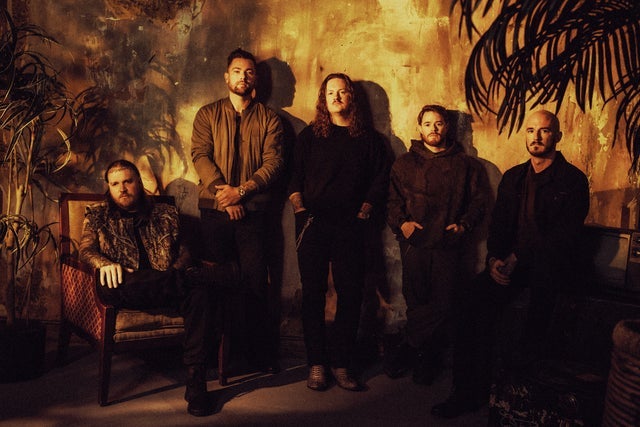
Wage War - It Calls Me By Name Tour
The Fillmore
San Francisco, CA
May 2 Sat • 2026 • 7:30pm
Alternative Rock | Rock and Pop | Hard Rock/Metal | Metal | Alternative | Festivals | More Concerts | Event
Ai Ticket Reselling Prediction
Sign Up to get artificial intelligence powered ticket reselling predictions!
Using artificial intelligence, concert attendance stats, and completed sales history for ticket prices on secondary market sites like Stubhub, we can predict whether this event is hot for resale. The Ai also considers factors like what music genre, and what market the concert is in.

Shazam is a music app that helps you identify the music playing around you. The more times an artist gets Shazamed, the higher this score will be, which should give you an idea of the popularity of this artist. Scores are ranked on a scale of 1 to 5. Learn more

Google Trends shows how popular a search query is for an artist. The more popular the artist is and the more people that are Googling them, the higher this score will be. Scores are ranked on a scale of 1 to 5. Learn more
1,315
Capacity
Wage War - It Calls Me By Name Tour at the The Fillmore, San Francisco, CA
Presale Passwords & On Sale Times
Wage War - It Calls Me By Name Tour
| Public Onsale | Feb 27 Fri 2026 | 10:00am | to | May 2 Sat 2026 | 9:30pm | |||
 Artist Presale Artist Presale |

|
Feb 25 Wed 2026 | 9:00am | to | Feb 26 Thu 2026 | 10:00pm | ||
 Citi® Cardmember Presale Citi® Cardmember Presale |
|
Feb 25 Wed 2026 | 9:00am | to | Feb 26 Thu 2026 | 10:00pm | ||
 Live Nation Presale Live Nation Presale |
|
Feb 25 Wed 2026 | 10:00am | to | Feb 26 Thu 2026 | 10:00pm | ||
| Spotify Presale |
|
Feb 26 Thu 2026 | 12:00pm | to | Feb 26 Thu 2026 | 11:59pm | ||
| Citi® Cardmember Preferred Tickets |
|
Feb 27 Fri 2026 | 10:00am | to | Apr 18 Sat 2026 | 10:00pm | ||
Tour Schedule
Wage War - It Calls Me By Name Tour
35 similar events found
| Event Date | Event | Venue | Capacity | Location | Report |
|---|---|---|---|---|---|
| Apr 25 Sat • 2026 • 11:00am | Sick New World | Las Vegas Festival Grounds |

|
Las Vegas, NV |  |
| Apr 28 Tue • 2026 • 8:00pm | Wage War: It Calls Me By Name Tour @ Rialto Theatre | Rialto Theatre-Tucson |
|
Tucson, AZ | |
| Apr 29 Wed • 2026 • 6:30pm | Wage War - It Calls Me By Name Tour | The Observatory North Park |
|
San Diego, CA | |
| Apr 30 Thu • 2026 • 7:00pm | Wage War - It Calls Me By Name Tour | House of Blues Anaheim |
|
Anaheim, CA | |
| May 2 Sat • 2026 • 7:30pm | Wage War - It Calls Me By Name Tour | The Fillmore |
|
San Francisco, CA | |
| Pro Members see all 35 upcoming events on the tour schedule. | |||||
Watch on YouTube
Listen on iTunes
Wikipedia Bio
 | This article needs additional citations for verification. Please help improve this article by adding citations to reliable sources. Unsourced material may be challenged and removed. Find sources: "Orthodox Judaism" – news · newspapers · books · scholar · JSTOR (January 2025) (Learn how and when to remove this message) |
 Jewish cemetery of the separate Orthodox community in Budapest, c. 1920. The Word "Orthodox" (ארטאדאקסען) inscribed in Hebrew letters, second from the left. | |
| Total population | |
|---|---|
| 2+ million practicing, ~4-5 million affiliated | |
| Founder | |
| Moses Sofer and other 19th-20th century traditionalist leaders | |
| Regions with significant populations | |
 Israel Israel | 1 million (strictly observant) – 2.2 million (identifying)[1] |
 United States United States | ~500,000[2] |
 United Kingdom United Kingdom | ~150,000[3] |
 Belgium Belgium | ~13,000[4] |
| Religions | |
| Judaism | |
| Scriptures | |
| Hebrew Bible | |
| Languages | |
| Hebrew, Yiddish | |
| The population numbers are estimates based on observant members. | |
| Part of a series on |
| Judaism |
|---|
 |
|
Related topics |

Orthodox Judaism is a collective term for the traditionalist branches of contemporary Judaism. Theologically, it is chiefly defined by regarding the Torah, both Written and Oral, as literally revealed by God on Mount Sinai and faithfully transmitted ever since.
Orthodox Judaism therefore advocates a strict observance of Jewish law, or halakha, which is to be interpreted and determined only according to traditional methods and in adherence to the continuum of received precedent through the ages. It regards the entire halakhic system as ultimately grounded in immutable revelation, essentially beyond external and historical influence. More than any theoretical issue, obeying the dietary, purity, ethical and other laws of halakha is the hallmark of Orthodoxy.
Observant Orthodox Jews are distinguishable by their lifestyle, refraining from doing numerous routine actions on the Sabbath and holidays, consuming only kosher food, praying thrice a day, studying the Torah often, donning head covering and tassels for men and modest clothing for women, and so forth. Other key doctrines include belief in a future bodily resurrection of the dead, divine reward and punishment for the righteous and the sinners, the Election of Israel as a people bound by a covenant with God, and an eventual reign of a salvific Messiah who will restore the Temple in Jerusalem and gather the people to Zion.
Orthodox Judaism is not a centralized denomination. Relations between its different subgroups are often strained, and the exact limits of Orthodoxy are subject to intense debate. Very roughly, it may be divided between the Haredi branch, commonly referred to as Ultra-Orthodox, which is more conservative and reclusive, and the Modern Orthodox, which is relatively open to larger society and partakes in secular life and culture. Each of those is itself formed of independent communities. These are almost uniformly exclusionist, regarding Orthodoxy as the only legitimate form of Judaism.
While adhering to traditional beliefs, the movement is a modern phenomenon. It arose as a result of the breakdown of the autonomous Jewish community since the late 18th century, and was much shaped by a conscious struggle against the pressures of secularization, acculturation and rival alternatives. The strictly observant Orthodox are a definite minority among all Jews, but there are also numerous semi- and non-practicing persons who are affiliated or personally identify with Orthodox communities and organizations. In total, Orthodox Judaism is the largest Jewish religious group, estimated to have over 2 million practicing adherents, and at least an equal number of nominal members or self-identifying supporters.
- ^ The 2016 Pew survey found that 22% of adult Jewish Israelis were dati or haredi, and 50% identified as Orthodox when asked. Adult Jewish population in Israel is roughly 4.5 million. See "demographics".
- ^ The 2013 Pew survey found out that 10% of adult American Jews identify as Orthodox, of a population of 4.2-5.3 million.
- ^ The 2016 synagoge survey found that 70% of British households with a membership (56,000 of 80,000) were Orthodox. With almost zero intermarriage, 120,000 is thus the minimum.
- ^ Staetsky, L. Daniel; DellaPergola, Sergio (November 2022). ""Jews in Belgium: a demographic and social portrait of two Jewish populations"". Institute for Jewish Policy Research.
{{cite web}}: CS1 maint: multiple names: authors list (link), p. 26.
Source: Wikipedia