
Event research THE GATHERING & ANNEKE VAN GIERSBERGEN
THE GATHERING & ANNEKE VAN GIERSBERGEN tickets are on sale right now.
Are THE GATHERING & ANNEKE VAN GIERSBERGEN tickets likely to be profitable in Villeurbanne, 69?
There are 0 presales for this event.
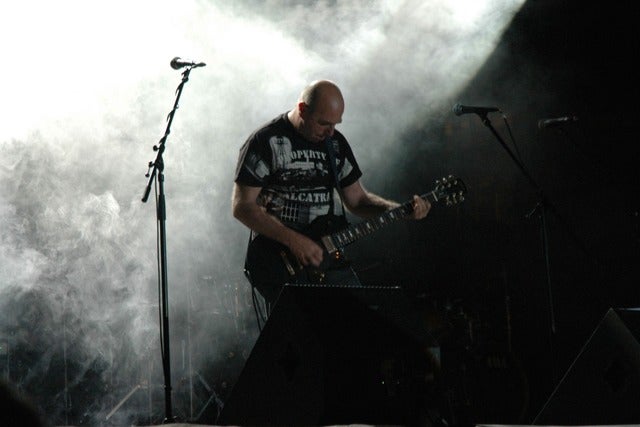
THE GATHERING & ANNEKE VAN GIERSBERGEN
LE TRANSBORDEUR
Villeurbanne, 69
May 24 Sun • 2026 • 6:00pm
Country and Folk | Hard Rock/Metal | Dance/Electronic | More Concerts | New Age and Spiritual | Metal
Ai Ticket Reselling Prediction
Sign Up to get artificial intelligence powered ticket reselling predictions!
Using artificial intelligence, concert attendance stats, and completed sales history for ticket prices on secondary market sites like Stubhub, we can predict whether this event is hot for resale. The Ai also considers factors like what music genre, and what market the concert is in.

Shazam is a music app that helps you identify the music playing around you. The more times an artist gets Shazamed, the higher this score will be, which should give you an idea of the popularity of this artist. Scores are ranked on a scale of 1 to 5. Learn more

Google Trends shows how popular a search query is for an artist. The more popular the artist is and the more people that are Googling them, the higher this score will be. Scores are ranked on a scale of 1 to 5. Learn more
1,800
Capacity
THE GATHERING & ANNEKE VAN GIERSBERGEN at the LE TRANSBORDEUR, Villeurbanne, 69
Tour Schedule
THE GATHERING & ANNEKE VAN GIERSBERGEN
5 similar events found
| Event Date | Event | Venue | Capacity | Location | Report |
|---|---|---|---|---|---|
| May 19 Tue • 2026 • 7:00pm | The Gathering: Mandylion - 30 years anniversary | O2 Shepherds Bush Empire |

|
London |  |
| May 21 Thu • 2026 • 6:30pm | THE GATHERING & ANNEKE VAN GIERSBERGEN | LE TRIANON |
|
Paris, 75 | |
| May 24 Sun • 2026 • 6:00pm | THE GATHERING & ANNEKE VAN GIERSBERGEN | LE TRANSBORDEUR |
|
Villeurbanne, 69 | |
| May 25 Mon • 2026 • 8:00pm | THE GATHERING | ROCKHAL CLUB - LUXEMBOURG |
|
Esch/alzette, 00 | |
| Jun 25 Thu • 2026 • 8:15pm | %100 Metal Sunar: The Gathering, The Pineapple Thief | Zorlu PSM - Turkcell Sahnesi |
|
İstanbul | |
Watch on YouTube
Listen on iTunes
Wikipedia Bio
| Card Game | |
 The back of a Magic card | |
| Designer | Richard Garfield |
|---|---|
| Publisher | Wizards of the Coast |
| Release date | August 5, 1993; 32 years ago (1993-08-05) |
| Type | Collectible |
| Players | 2 or more |
| Skills | |
| Age range | 13+ |
| Chance | Some (order of cards drawn, varying card abilities) |
| Website | magic |
Magic: The Gathering (colloquially known as Magic or MTG) is a collectible, tabletop, and digital collectible card game created by Richard Garfield.[1] Wizards of the Coast released Magic in 1993 as its first trading card game. As of February 2023[update], it has amassed approximately fifty million players.[2][3][4][5] From 2008 to 2016, over twenty billion Magic cards were printed as the game grew in popularity.[6][7] For the 2022 fiscal year[update], Hasbro announced Magic had generated $1 billion in annual revenue.[5][8]
Players in a game of Magic represent powerful dueling wizards called Planeswalkers. Each card a player draws from their deck represents a magical spell which can be used to their advantage in battle. Instant and Sorcery cards represent magical spells a player may cast for a one-time effect, while Creature, Artifact, Enchantment, Planeswalker, and Battle cards remain on the Battlefield to provide long-term advantage. Players usually must include resource, or Land cards representing the amount of mana that is available to cast their spells. Typically, a player defeats their opponent(s) by reducing their life totals to zero, which is commonly done via combat damage by attacking with creatures. Many other sources of damage exist in the game, in addition to alternative win-conditions which do not check life totals.
Although the original concept of the game drew heavily from the motifs of traditional fantasy role-playing games such as Dungeons & Dragons, the gameplay bears little similarity to tabletop role-playing games, while simultaneously having substantially more cards and more complex rules than many other card games.
Magic can be played by two or more players, either in person with paper cards or on a computer, smartphone or tablet with virtual cards through Internet-based software such as Magic: The Gathering Online, Magic: The Gathering Arena, Magic Duels and several others. It can be played in various rule formats, which fall into two categories: constructed and limited. Limited formats involve players creating a deck spontaneously out of a pool of random cards typically with a minimum deck size of 40 cards.[9] In constructed formats, players create decks from cards they own, usually with a minimum of 60 cards per deck.
New cards are released on a regular basis through expansion sets. Further developments include the Wizards Play Network played at the international level and the worldwide community Players Tour, as well as a substantial resale market for Magic cards. Certain cards can be valuable due to their rarity in production and utility in gameplay, with prices ranging from a few cents to tens of thousands of dollars.
- ^ "Magic: The Gathering Online Review". Archived from the original on July 16, 2009. Retrieved May 27, 2009.
- ^ Kotha, Suresh (October 19, 1998). "Wizards of the Coast" (PDF). University of Washington School of Public Health. Archived from the original (PDF) on September 1, 2006. Retrieved August 11, 2013.
- ^ Lang, Eric (January 27, 2008). "Design Decisions and Concepts in Licensed Collectible Card Games". Electronic Book Review. Archived from the original on September 5, 2015. Retrieved November 22, 2014.
- ^ Duffy, Owen (July 10, 2015). "How Magic: the Gathering became a pop-culture hit – and where it goes next". The Guardian. Archived from the original on December 30, 2020. Retrieved July 14, 2015.
The original card game has 20 million players worldwide.
- ^ a b Schmidt, Gregory (February 16, 2023). "Magic: The Gathering Becomes a Billion-Dollar Brand for Toymaker Hasbro". The New York Times. Archived from the original on January 17, 2024. Retrieved January 17, 2024.
- ^ "Magic: the Gathering anniversary Facts & Figures". Wizards of the Coast. 2017. Archived from the original on June 4, 2020. Retrieved July 25, 2018.
- ^ Webb, Kevin (December 8, 2018). "With more than 35 million players worldwide, Magic the Gathering is giving back to its community with a brand new game and $10 million in esports prize money". Business Insider. Archived from the original on February 7, 2021. Retrieved August 15, 2020.
- ^ Hasbro, Inc. (February 16, 2023). "Hasbro Reports Fourth Quarter and Full-Year 2022 Financial Results". Hasbro. Archived from the original on October 2, 2023. Retrieved February 23, 2024.
- ^ "Formats". Magic: The Gathering. Archived from the original on December 2, 2017. Retrieved September 10, 2021.
Source: Wikipedia