
Event research Interpol
Interpol tickets are on sale right now.
Are Interpol tickets likely to be profitable in Tucson, AZ?
There are 0 presales for this event.
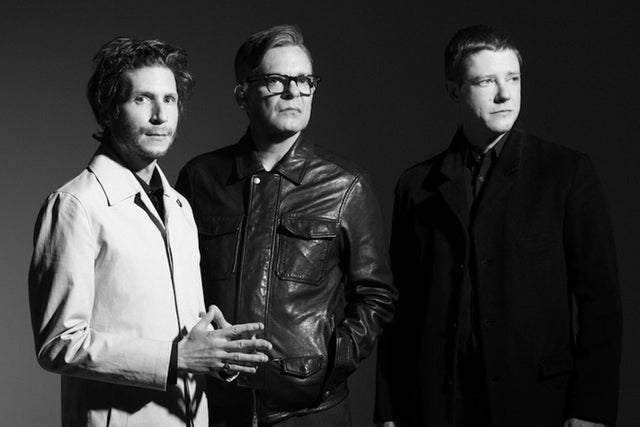
Interpol
La Rosa
Tucson, AZ
Apr 13 Mon • 2026 • 7:30pm
Alternative Rock | Rock and Pop | Festivals | Rock
Ai Ticket Reselling Prediction
Sign Up to get artificial intelligence powered ticket reselling predictions!
Using artificial intelligence, concert attendance stats, and completed sales history for ticket prices on secondary market sites like Stubhub, we can predict whether this event is hot for resale. The Ai also considers factors like what music genre, and what market the concert is in.


Shazam is a music app that helps you identify the music playing around you. The more times an artist gets Shazamed, the higher this score will be, which should give you an idea of the popularity of this artist. Scores are ranked on a scale of 1 to 5. Learn more

Google Trends shows how popular a search query is for an artist. The more popular the artist is and the more people that are Googling them, the higher this score will be. Scores are ranked on a scale of 1 to 5. Learn more
Interpol at the La Rosa, Tucson, AZ
Tour Schedule
Interpol
32 similar events found
| Event Date | Event | Venue | Capacity | Location | Report |
|---|---|---|---|---|---|
| Apr 8 Wed • 2026 • 8:00pm | Interpol | Channel 24 |
|
Sacramento, CA |  |
| Apr 9 Thu • 2026 • 8:00pm | Interpol | Channel 24 |
|
Sacramento, CA | |
| Apr 13 Mon • 2026 • 7:30pm | Interpol | La Rosa | Tucson, AZ | |
|
| Apr 13 Mon • 2026 • 8:30pm | Interpol | La Rosa | Tucson, AZ | |
|
| Apr 14 Tue • 2026 • 8:00pm | Interpol | Abraham Chavez Theatre |
|
El Paso, TX | |
| Pro Members see all 32 upcoming events on the tour schedule. | |||||
Watch on YouTube
Listen on iTunes
Wikipedia Bio
 | |
 | |
| Common name | Interpol |
| Abbreviation | ICPO-INTERPOL |
| Motto | Connecting police for a safer world |
| Agency overview | |
| Formed | 7 September 1923; 102 years ago (1923-09-07) |
| Preceding agencies |
|
| Employees | 1,050 (2019) |
| Annual budget | €176 million (2023) |
| Jurisdictional structure | |
| International agency | |
| Countries | 196 member states |
| Governing body | General Assembly |
| Constituting instrument | |
| Operational structure | |
| Headquarters | Lyon, France |
| Multinational agency | |
| Nationalities of personnel | 130 (2024) |
| Agency executives |
|
| Facilities | |
| National Central Bureaus | 196 |
| Website | |
interpol | |
The International Criminal Police Organization – INTERPOL (abbreviated as ICPO–INTERPOL), commonly known as Interpol[3] (UK: /ˈɪntərpɒl/ IN-tər-pol, US: /-poʊl/ -pohl;[4] stylized in allcaps), is an international organization that facilitates worldwide police cooperation and crime control. It is the world's largest international police organization. It is headquartered in Lyon, France, with seven regional bureaus worldwide, and a National Central Bureau in all 196 member states.[5]
The organization today known as Interpol was founded on 7 September 1923 at the close of a five-day International Police Congress in Vienna as the International Criminal Police Commission (ICPC);[6] it adopted many of its current duties throughout the 1930s. After coming under Nazi control in 1938,[7] the agency had its headquarters in the same building as the Gestapo.[8] It was effectively stagnant until the end of World War II.[7] In 1956, the ICPC adopted a new constitution and the name Interpol, derived from its telegraphic address used since 1946.[3]
Interpol provides investigative support, expertise and training to law enforcement worldwide, focusing on three major areas of transnational crime: terrorism, cybercrime and organized crime. Its broad mandate covers virtually every kind of crime, including crimes against humanity, child pornography, drug trafficking and production, political corruption, intellectual property infringement, as well as white-collar crime.[9] The agency also facilitates cooperation among national law enforcement institutions through the utilisation of criminal databases, crime information centers, and communications networks. Contrary to popular belief, Interpol is itself not a law enforcement agency.
Interpol has an annual budget of €142 million ($155 million), most of which comes from annual contributions by member police forces in 181 countries. It is governed by a General Assembly composed of all member countries[10], which elects the executive committee[10] and the president (currently Lucas Philippe of France) to supervise and implement Interpol's policies and administration. Day-to-day operations are carried out by the General Secretariat, comprising around 1,000 personnel from over 100 countries, including both police and civilians. The Secretariat is led by the secretary-general, currently Valdecy Urquiza, the former vice president of Interpol for the Americas.[11]
Pursuant to its charter, Interpol seeks to remain politically neutral in fulfilling its mandate, and is thus barred from interventions or activities that are political, military, religious, or racial in nature and from involving itself in disputes over such matters.[12] The agency operates in four languages: Arabic, English, French and Spanish.[5]
- ^ Cite error: The named reference
Constitution2008was invoked but never defined (see the help page). - ^ "General Regulations of the International Criminal Police Organization" (PDF). Interpol, Office of Legal Affairs. 1956. Archived from the original (PDF) on 7 February 2016. Retrieved 12 March 2016.
- ^ a b "Who we are | Name and logo". INTERPOL. Archived from the original on 26 October 2023. Retrieved 30 January 2024.
- ^ Wells, John (2007) [2000]. Longman Pronunciation Dictionary (New / Paperback (9th impression) ed.). Harlow: Pearson Longman. p. 398. ISBN 978-0-582-36467-7. Retrieved 30 January 2024 – via Internet Archive Book Reader.
- ^ a b "General Secretariat". www.interpol.int. Archived from the original on 30 March 2020. Retrieved 19 March 2020.
- ^ Mathieu Deflem, Policing World Society: Historical Foundations of International Police Cooperation (Oxford University Press, 2004) p. 125
- ^ a b "7. September 1923 – Interpol wird gegründet" [September 7, 1923 – Interpol is founded]. Westdeutscher Rundfunk (in German). 7 September 2013. Archived from the original on 7 September 2022. Retrieved 7 September 2022.
- ^ Posner, Gerald (6 March 1990). "Opinion | Interpol's Nazi Affiliations Continued After War". The New York Times. p. A-22. ISSN 0362-4331. Archived from the original on 7 September 2022. Retrieved 7 September 2022.
- ^ Sweet O.C., David (September 2010). "INTERPOL DVI best-practice standards—An overview". Forensic Science International. 201 (1–3): 18–21. doi:10.1016/j.forsciint.2010.02.031. PMID 20303223. ProQuest 1034458337.
- ^ a b "General Assembly". www.interpol.int. Retrieved 31 March 2026.
- ^ "INTERPOL Executive Committee selects Brazil's Valdecy Urquiza as its candidate for next Secretary General". interpol.int. 25 June 2024.
- ^ "Neutrality (Article 3 of the Constitution)". INTERPOL. Archived from the original on 31 March 2017. Retrieved 31 March 2017.
Source: Wikipedia