
Event research Winyah
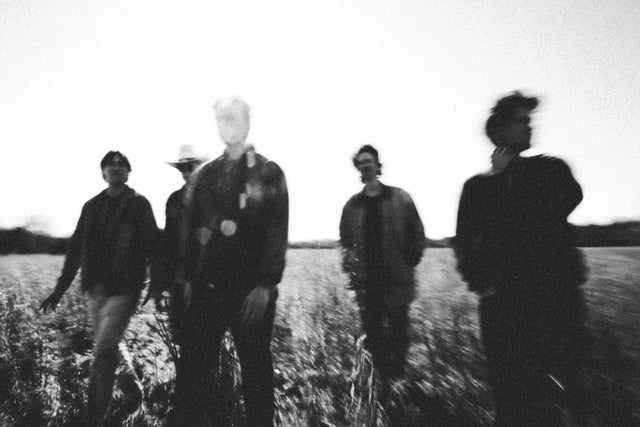
Winyah tickets are on sale right now.
Are Winyah tickets likely to be profitable in Dallas, TX?
There are 0 presales for this event.

Ai Ticket Reselling Prediction
Sign Up to get artificial intelligence powered ticket reselling predictions!
Using artificial intelligence, concert attendance stats, and completed sales history for ticket prices on secondary market sites like Stubhub, we can predict whether this event is hot for resale. The Ai also considers factors like what music genre, and what market the concert is in.

Shazam is a music app that helps you identify the music playing around you. The more times an artist gets Shazamed, the higher this score will be, which should give you an idea of the popularity of this artist. Scores are ranked on a scale of 1 to 5. Learn more

Google Trends shows how popular a search query is for an artist. The more popular the artist is and the more people that are Googling them, the higher this score will be. Scores are ranked on a scale of 1 to 5. Learn more
Winyah at the AM/FM Dallas, Dallas, TX
Tour Schedule
Winyah
19 similar events found
| Event Date | Event | Venue | Capacity | Location | Report |
|---|---|---|---|---|---|
| Mar 27 Fri • 2026 • 8:00pm | Winyah w/ Edgehill | Antone's Nightclub | Austin, TX |  |
|
| Mar 28 Sat • 2026 • 7:00pm | Winyah | AM/FM Dallas | Dallas, TX | |
|
| Mar 31 Tue • 2026 • 8:00pm | Winyah w/ Cardinal Bloom | The Rebel Lounge |

|
Phoenix, AZ | |
| Apr 2 Thu • 2026 • 7:00pm | Winyah | Voodoo Room at the House of Blues San Diego |
|
San Diego, CA | |
| Apr 3 Fri • 2026 • 7:00pm | Winyah with Cardinal Bloom - SOLD OUT | The Echo |
|
Los Angeles, CA | |
| Pro Members see all 19 upcoming events on the tour schedule. | |||||
Watch on YouTube
Listen on iTunes
Wikipedia Bio
 Close-up of Emanuel Bowen's 1752 map, Provinces of North & South Carolina, Georgia, depicting the location of the Winyah or 'Winyou' Indians. | |
| Total population | |
|---|---|
| Extinct 106[1] (1715) | |
| Regions with significant populations | |
| Winyah Bay, Black River, and the lower course of the Pee Dee River.[2] | |
| Languages | |
| Siouan (Catawban)[3] | |
| Religion | |
| Native American religion | |
| Related ethnic groups | |
| Cape Fear, Pedee, Waccamaw |
The Winyah (/ˈwɪnjɑː/ WIN-yah) were an Indigenous people of the Southeastern Woodlands who lived near Winyah Bay, the Black River, and the lower course of the Pee Dee River in South Carolina during the 18th century. In the early 20th century, anthropologist John R. Swanton suggested they had ceased to exist as a distinct group by 1720 and speculated that members of the tribe may have merged with the nearby Waccamaw.[4] However, the Winyah appear thirty-two years later on a 1752 map between the Black River and Pee Dee River.[5] Their ultimate fate remains unknown.[2]
- ^ Milling, Chapman J. (1969). Red Carolinians (2nd ed.). Columbia, S.C.: University of South Carolina Press. p. 222.
- ^ a b Swanton, 103.
- ^ Swanton, 102–03.
- ^ Swanton, John Reed (1952). The Indian Tribes of North America. Genealogical Publishing Com. p. 103. ISBN 9780806317304. Retrieved 20 September 2017.
{{cite book}}: ISBN / Date incompatibility (help) - ^ Bowen, Emanuel. "A new & accurate map of the provinces of North & South Carolina, Georgia &c., 1752". www.loc.gov. Library of Congress. Retrieved 1 February 2025.
Source: Wikipedia