
Event research Magnolia Park - Nights After VAMP Tour
Magnolia Park - Nights After VAMP Tour tickets are on sale right now.
Are Magnolia Park - Nights After VAMP Tour tickets likely to be profitable in Washington, DC?
There are 0 presales for this event.
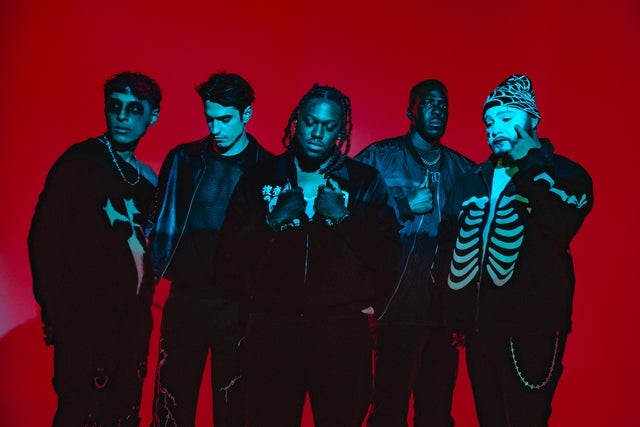
Magnolia Park - Nights After VAMP Tour
Union Stage
Washington, DC
Apr 21 Tue • 2026 • 7:00pm
Rock | Festivals
Ai Ticket Reselling Prediction
Sign Up to get artificial intelligence powered ticket reselling predictions!
Using artificial intelligence, concert attendance stats, and completed sales history for ticket prices on secondary market sites like Stubhub, we can predict whether this event is hot for resale. The Ai also considers factors like what music genre, and what market the concert is in.


Shazam is a music app that helps you identify the music playing around you. The more times an artist gets Shazamed, the higher this score will be, which should give you an idea of the popularity of this artist. Scores are ranked on a scale of 1 to 5. Learn more

Google Trends shows how popular a search query is for an artist. The more popular the artist is and the more people that are Googling them, the higher this score will be. Scores are ranked on a scale of 1 to 5. Learn more
450
Capacity
Magnolia Park - Nights After VAMP Tour at the Union Stage, Washington, DC
Tour Schedule
Magnolia Park - Nights After VAMP Tour
27 similar events found
| Event Date | Event | Venue | Capacity | Location | Report |
|---|---|---|---|---|---|
| Apr 10 Fri • 2026 • 7:30pm | Magnolia Park w/ Silly Goose | The Castle Theatre |
|
Bloomington, IL |  |
| Apr 11 Sat • 2026 • 8:00pm | Magnolia Park - Nights After VAMP Tour | Majestic Theatre |
|
Madison, WI | |
| Apr 14 Tue • 2026 • 7:30pm | Magnolia Park – Nights After VAMP Tour | Buffalo Iron Works |
|
Buffalo, NY | |
| Apr 14 Tue • 2026 • 7:30pm | Magnolia Park (16 and Over) | Buffalo Iron Works |
|
Buffalo, NY | |
| Apr 15 Wed • 2026 • 8:00pm | Magnolia Park - Nights After VAMP Tour | Le Studio TD |
|
Montreal, QC | |
| Pro Members see all 27 upcoming events on the tour schedule. | |||||
Watch on YouTube
Listen on iTunes
Wikipedia Bio

Problems playing this file? See media help.


| Colors of noise |
|---|
Pink noise, 1/f noise, fractional noise or fractal noise is a signal or process with a frequency spectrum such that the power spectral density (power per frequency interval) is inversely proportional to the frequency of the signal. In pink noise, each octave interval (halving or doubling in frequency) carries an equal amount of noise energy.
Pink noise sounds like a waterfall.[2] It is often used to tune loudspeaker systems in professional audio.[3] Pink noise is one of the most commonly observed signals in biological systems.[4]
The name arises from the pink appearance of visible light with this power spectrum.[5] This is in contrast with white noise that has equal intensity per frequency interval.
- ^ Cite error: The named reference
Field-1987was invoked but never defined (see the help page). - ^ "Glossary: Pink Noise". Sound on Sound. Retrieved November 22, 2022.
- ^ Davis, Gary; Jones, Ralph (1987). The Sound Reinforcement Handbook. Hal Leonard. p. 107. ISBN 0-88188-900-8.
- ^ Szendro, P (2001). "Pink-Noise Behaviour of Biosystems". European Biophysics Journal. 30 (3): 227–231. doi:10.1007/s002490100143. PMID 11508842. S2CID 24505215.
- ^ Downey, Allen (2012). Think Complexity. O'Reilly Media. p. 79. ISBN 978-1-4493-1463-7.
Visible light with this power spectrum looks pink, hence the name.
Source: Wikipedia