
Event research Microwave
Microwave tickets are on sale right now.
Are Microwave tickets likely to be profitable in Columbia, SC?
There are 3 presales for this event - we have 1 unique password for these presales.
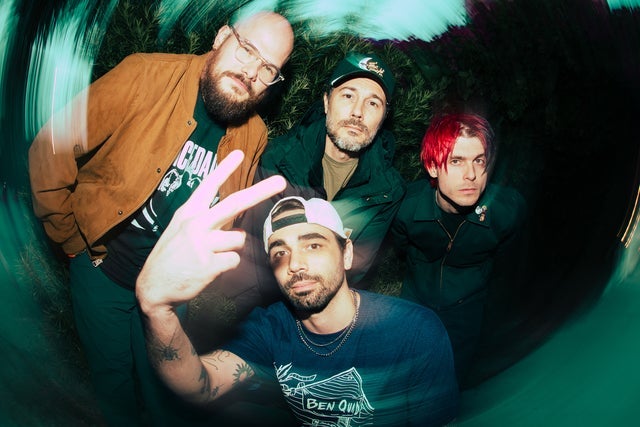
Microwave
The Senate
Columbia, SC
Mar 21 Sat • 2026 • 7:30pm
Alternative Rock | Rock and Pop | Country and Folk | More Concerts | Event | Rock | Festivals
Ai Ticket Reselling Prediction
Sign Up to get artificial intelligence powered ticket reselling predictions!
Using artificial intelligence, concert attendance stats, and completed sales history for ticket prices on secondary market sites like Stubhub, we can predict whether this event is hot for resale. The Ai also considers factors like what music genre, and what market the concert is in.

Shazam is a music app that helps you identify the music playing around you. The more times an artist gets Shazamed, the higher this score will be, which should give you an idea of the popularity of this artist. Scores are ranked on a scale of 1 to 5. Learn more


Google Trends shows how popular a search query is for an artist. The more popular the artist is and the more people that are Googling them, the higher this score will be. Scores are ranked on a scale of 1 to 5. Learn more
1,200
Capacity
Microwave at the The Senate, Columbia, SC
Presale Passwords & On Sale Times
Microwave
| Public Onsale | Dec 12 Fri 2025 | 10:00am | to | Mar 21 Sat 2026 | 11:30pm | |||
 VIP Package Presale VIP Package Presale |
Dec 9 Tue 2025 | 12:00pm | to | Dec 11 Thu 2025 | 10:00pm | |||
 Artist Presale Artist Presale |

|
Dec 10 Wed 2025 | 11:00am | to | Dec 11 Thu 2025 | 10:00pm | ||
| VIP Packages Onsale |
Dec 12 Fri 2025 | 10:00am | to | Mar 16 Mon 2026 | 10:00pm | |||
Tour Schedule
Microwave
22 similar events found
| Event Date | Event | Venue | Capacity | Location | Report |
|---|---|---|---|---|---|
| Mar 20 Fri • 2026 • 6:00pm | Microwave - celebrating 10 years of the album Much Love | The Masquerade - Heaven |
|
Atlanta, GA |  |
| Mar 21 Sat • 2026 • 7:30pm | Microwave | The Senate |
|
Columbia, SC | |
| Mar 22 Sun • 2026 • 6:00pm | Microwave's 'Much Love' 10 Year Anniversary Tour | House of Blues Orlando |
|
Orlando, FL | |
| Mar 24 Tue • 2026 • 6:00pm | Microwave - 'Much Love' 10 Year Anniversary Tour | House of Blues Dallas |
|
Dallas, TX | |
| Mar 25 Wed • 2026 • 6:00pm | Microwave - 'Much Love' 10 Year Anniversary Tour | Emo's Austin |
|
Austin, TX | |
| Pro Members see all 22 upcoming events on the tour schedule. | |||||
Watch on YouTube
Listen on iTunes
Wikipedia Bio

Microwave is a form of electromagnetic radiation with wavelengths shorter than other radio waves but longer than infrared waves. Its wavelength ranges from about one meter to one millimeter, corresponding to frequencies between 300 MHz and 300 GHz, broadly construed.[1][2][3] A more common definition in radio-frequency engineering is the range between 1 and 100 GHz (wavelengths between 30 cm and 3 mm),[4]: 3 or between 1 and 3000 GHz (30 cm and 0.1 mm).[5][6] In all cases, microwaves include the entire super high frequency (SHF) band (3 to 30 GHz, or 10 to 1 cm) at minimum. The boundaries between far infrared, terahertz radiation, microwaves, and ultra-high-frequency (UHF) are fairly arbitrary and differ between different fields of study.[4]: 3
The prefix micro- in microwave indicates that microwaves are small (having shorter wavelengths), compared to the radio waves used in prior radio technology. Frequencies in the microwave range are often referred to by their IEEE radar band designations: S, C, X, Ku, K, or Ka band, or by similar NATO or EU designations.
Microwaves travel by line-of-sight; unlike lower frequency radio waves, they do not diffract around hills, follow the Earth's surface as ground waves, or reflect from the ionosphere, so terrestrial microwave communication links are limited by the visual horizon to about 40 miles (64 km). At the high end of the band, they are absorbed by gases in the atmosphere, limiting practical communication distances to around a kilometer.
Microwaves are widely used in modern technology, for example in point-to-point communication links, wireless networks, microwave radio relay networks, radar, satellite and spacecraft communication, medical diathermy and cancer treatment, remote sensing, radio astronomy, particle accelerators, spectroscopy, industrial heating, collision avoidance systems, garage door openers and keyless entry systems, and for cooking food in microwave ovens.
- ^ Hitchcock, R. Timothy (2004). Radio-frequency and Microwave Radiation. American Industrial Hygiene Assn. p. 1. ISBN 978-1931504553.
- ^ Jones, Graham A.; Layer, David H.; Osenkowsky, Thomas G. (2013). National Association of Broadcasters Engineering Handbook, 10th Ed. Focal Press. p. 6. ISBN 978-1136034107.
- ^ "Electromagnetic radiation - Microwaves, Wavelengths, Frequency | Britannica". www.britannica.com. Retrieved 2023-08-15.
- ^ a b Kumar, Sanjay; Shukla, Saurabh (2014). Concepts and Applications of Microwave Engineering. PHI Learning Pvt. Ltd. ISBN 978-8120349353.
- ^ "Details for IEV number 713-06-03: "microwave"". International Electrotechnical Vocabulary (in Japanese). Retrieved 2024-03-27.
- ^ "Details for IEV number 701-02-12: "radio wave"". International Electrotechnical Vocabulary (in Japanese). Retrieved 2024-03-27.
Source: Wikipedia