
Event research Draumkvedet
Draumkvedet tickets are on sale right now.
Are Draumkvedet tickets likely to be profitable in Oslo?
There are 0 presales for this event.

Ai Ticket Reselling Prediction
Sign Up to get artificial intelligence powered ticket reselling predictions!
Using artificial intelligence, concert attendance stats, and completed sales history for ticket prices on secondary market sites like Stubhub, we can predict whether this event is hot for resale. The Ai also considers factors like what music genre, and what market the concert is in.

Shazam is a music app that helps you identify the music playing around you. The more times an artist gets Shazamed, the higher this score will be, which should give you an idea of the popularity of this artist. Scores are ranked on a scale of 1 to 5. Learn more

Google Trends shows how popular a search query is for an artist. The more popular the artist is and the more people that are Googling them, the higher this score will be. Scores are ranked on a scale of 1 to 5. Learn more
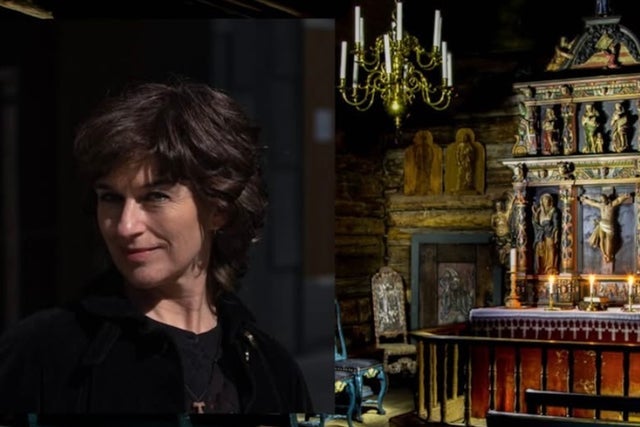
Draumkvedet at the Kulturkirken Jakob, Oslo
Tour Schedule
Draumkvedet
20 similar events found
| Event Date | Event | Venue | Capacity | Location | Report |
|---|---|---|---|---|---|
| Apr 9 Thu • 2026 • 6:00pm | Høyer og Haydn | Kulturkirken Jakob | Oslo |  |
|
| Apr 15 Wed • 2026 • 7:00pm | Det Norske Kammerorkester // Grieg og Sjostakovitsj | Kulturkirken Jakob | Oslo | |
|
| Apr 24 Fri • 2026 • 1:00pm | Oslo Brassfestival - fredag | Kulturkirken Jakob | Oslo | |
|
| Apr 29 Wed • 2026 • 7:30pm | Ingvild Homme // På Gølvet i Jakob (Support:Julie Kleive) | Kulturkirken Jakob | Oslo | |
|
| May 3 Sun • 2026 • 7:30pm | Blue Whale – Rain Sultanov | Kulturkirken Jakob | Oslo | |
|
| Pro Members see all 20 upcoming events on the tour schedule. | |||||
Watch on YouTube
Listen on iTunes
Wikipedia Bio
 | You can help expand this article with text translated from the corresponding article in Norwegian. (May 2012) Click [show] for important translation instructions.
|
"Draumkvedet" (lit. 'The Dream Poem'; NMB 54, TSB B 31) is a Norwegian visionary poem, probably dated from the late medieval age.[1][2] It is one of the best known medieval ballads in Norway. The first written versions are from Lårdal Municipality and Kviteseid Municipality in Telemark in the 1840s.
The protagonist, Olav Åsteson, falls asleep on Christmas Eve and sleeps until the thirteenth day of Christmas. Then he wakes, and rides to church to recount his dreams to the congregation, about his journey through the afterlife. The events are in part similar to other medieval ballads like the Lyke Wake Dirge: a moor of thorns, a tall bridge, and a black fire. After these, the protagonist is also allowed to see Hell and some of Heaven. The poem concludes with specific advice of charity and compassion, to avoid the various trials of the afterlife.
- ^ Knut Liestøl: "Draumkvedet. A Visionary Poem from the Middle Ages", Studia Norvegica 3, 1946
- ^ "The Dream Lay" Archived 14 October 2007 at the Wayback Machine – Listen to Norway, Vol.9 - 2001 No. 1 (Retrieved on 18 February 2008)
Source: Wikipedia