
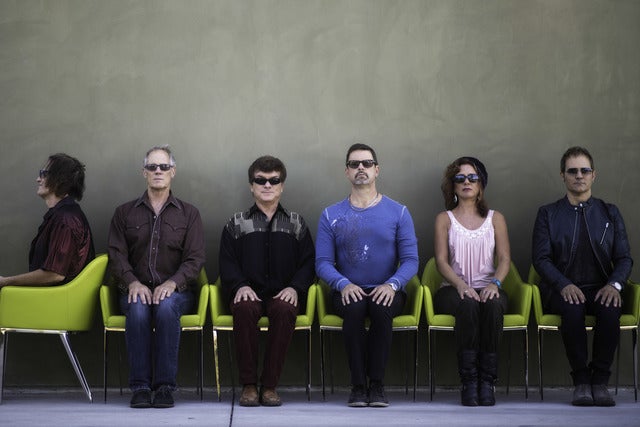
Event research Ambrosia
Ambrosia tickets are on sale right now.
Are Ambrosia tickets likely to be profitable in Cincinnati, OH?
There are 0 presales for this event.

Ai Ticket Reselling Prediction
Sign Up to get artificial intelligence powered ticket reselling predictions!
Using artificial intelligence, concert attendance stats, and completed sales history for ticket prices on secondary market sites like Stubhub, we can predict whether this event is hot for resale. The Ai also considers factors like what music genre, and what market the concert is in.


Shazam is a music app that helps you identify the music playing around you. The more times an artist gets Shazamed, the higher this score will be, which should give you an idea of the popularity of this artist. Scores are ranked on a scale of 1 to 5. Learn more

Google Trends shows how popular a search query is for an artist. The more popular the artist is and the more people that are Googling them, the higher this score will be. Scores are ranked on a scale of 1 to 5. Learn more
556
Capacity
Ambrosia at the Memorial Hall - OH, Cincinnati, OH
Tour Schedule
Ambrosia
7 similar events found
| Event Date | Event | Venue | Capacity | Location | Report |
|---|---|---|---|---|---|
| Apr 24 Fri • 2026 • 7:30pm | Ambrosia with Special Guest John Ford Coley | Gas South Theater |
|
Duluth, GA |  |
| May 21 Thu • 2026 • 7:00pm | Three Dog Night + Ambrosia with John Ford Coley | DECC Symphony Hall |
|
Duluth, MN | |
| May 22 Fri • 2026 • 7:00pm | Three Dog Night + Ambrosia W/ John Ford Coley | Mayo Civic Center Auditorium |
|
Rochester, MN | |
| May 29 Fri • 2026 • 8:00pm | Yacht Rock Celebration! (21+ Event) Ambrosia & Pablo Cruise | Xcite Center |
|
Bensalem, PA | |
| Jun 5 Fri • 2026 • 7:30pm | Ambrosia | Plaza Theatre |
|
Palm Springs, CA | |
| Pro Members see all 7 upcoming events on the tour schedule. | |||||
Watch on YouTube
Listen on iTunes
Wikipedia Bio

In the ancient Greek myths, ambrosia (/æmˈbroʊziə, -ʒə/, Ancient Greek: ἀμβροσία 'immortality') is the food or drink of the Greek gods,[1] and is often depicted as conferring longevity or immortality upon whoever consumed it.[2] It was brought to the gods in Olympus by doves and served either by Hebe or by Ganymede at the heavenly feast.[3][4]
Ancient art sometimes depicted ambrosia as distributed by the nymph named Ambrosia, a nurse of Dionysus.[5]
- ^ Chisholm, Hugh, ed. (1911). "Ambrosia" . Encyclopædia Britannica. Vol. 1 (11th ed.). Cambridge University Press. p. 800.
- ^ Griffiths, Alan H. (1996), "Ambrosia", in Hornblower, Simon; Spawforth, Anthony (eds.), Oxford Classical Dictionary (3rd ed.), Oxford: Oxford University Press, ISBN 0-19-521693-8
- ^ Homer, Odyssey xii.62
- ^ Cicero. De Natura Deorum. p. 1.40.
- ^ Ruth E. Leader-Newby, Silver and Society in Late Antiquity: Functions and Meanings of Silver Plate in the Fourth to Seventh Centuries (Ashgate, 2004), p. 133; Christine Kondoleon, Domestic and Divine: Roman Mosaics in the House of Dionysos (Cornell University Press, 1995), p. 246; Katherine M. D. Dunbabin, Mosaics of the Greek and Roman World (Cambridge University Press, 1999), pp. 136, 142, 276–277.
Source: Wikipedia