
Event research BurnDown - LSD and the Search for God + more!
BurnDown - LSD and the Search for God + more! tickets are on sale right now.
Are BurnDown - LSD and the Search for God + more! tickets likely to be profitable in Santa Ana, CA?
There are 0 presales for this event.
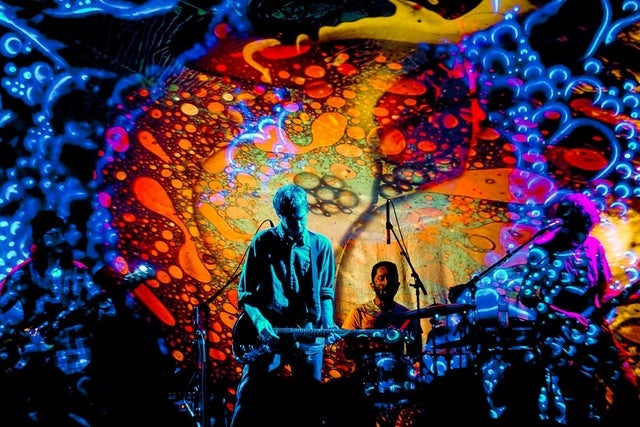
BurnDown - LSD and the Search for God + more!
The Observatory
Santa Ana, CA
Jan 24 Sat • 2026 • 3:30pm
Alternative Rock | R&B | Other | Rock | Alternative | Metal | Rock and Pop | Hard Rock/Metal | Festivals
Ai Ticket Reselling Prediction
Sign Up to get artificial intelligence powered ticket reselling predictions!
Using artificial intelligence, concert attendance stats, and completed sales history for ticket prices on secondary market sites like Stubhub, we can predict whether this event is hot for resale. The Ai also considers factors like what music genre, and what market the concert is in.

Shazam is a music app that helps you identify the music playing around you. The more times an artist gets Shazamed, the higher this score will be, which should give you an idea of the popularity of this artist. Scores are ranked on a scale of 1 to 5. Learn more


Google Trends shows how popular a search query is for an artist. The more popular the artist is and the more people that are Googling them, the higher this score will be. Scores are ranked on a scale of 1 to 5. Learn more
555
Capacity
BurnDown - LSD and the Search for God + more! at the The Observatory, Santa Ana, CA
Tour Schedule
BurnDown - LSD and the Search for God + more!
20 similar events found
| Event Date | Event | Venue | Capacity | Location | Report |
|---|---|---|---|---|---|
| Apr 15 Wed • 2026 • 6:00pm | Clarion | Mercury Lounge |
|
New York, NY |  |
| Apr 15 Wed • 2026 • 9:00pm | Clarion | Mercury Lounge |
|
New York, NY | |
| Apr 22 Wed • 2026 • 8:00pm | Die Spitz | Neptune Theatre |
|
Seattle, WA | |
| Apr 24 Fri • 2026 • 6:00pm | Everyone Asked About You w/ First Day Back | Quartyard |
|
San Diego, CA | |
| Apr 25 Sat • 2026 • 7:00pm | Clarion - Blue Fairy Tour | The Masquerade - Altar |
|
Atlanta, GA | |
| Pro Members see all 20 upcoming events on the tour schedule. | |||||
Watch on YouTube
Listen on iTunes
Wikipedia Bio


Catalysis (/kəˈtælɪsɪs/, kə-TAL-iss-iss) is the increase in rate of a chemical reaction due to an added substance known as a catalyst[1][2] (/ˈkætəlɪst/ KAT-əl-ist). Catalysts are not consumed by the reaction and remain unchanged after the reaction.[3] If the reaction is rapid and the catalyst is recycled quickly, a very small amount of catalyst often suffices;[4] mixing, surface area, and temperature are important factors in reaction rate. Catalysts generally react with one or more reactants to form intermediates that subsequently give the final reaction product, in the process of regenerating the catalyst.
The rate increase occurs because the catalyst allows the reaction to occur by an alternative mechanism which may be much faster than the noncatalyzed mechanism. However the noncatalyzed mechanism does remain possible, so that the total rate (catalyzed plus noncatalyzed) can only increase in the presence of the catalyst and never decrease.[5]
Catalysis may be classified as either homogeneous, whose components are dispersed in the same phase (usually gaseous or liquid) as the reactant, or heterogeneous, whose components are not in the same phase. Enzymes and other biocatalysts are often considered as a third category.
Catalysis is nearly ubiquitous in chemical industry.[6] Estimates are that 90% of all commercially produced chemical products involve catalysts at some stage in the process of their manufacture.[7]
The term "catalyst" is derived from Greek καταλύειν, kataluein, meaning "loosen" or "untie". The concept of catalysis was invented by chemist Elizabeth Fulhame, based on her novel work in oxidation-reduction experiments.[8][9]
- ^ IUPAC, Compendium of Chemical Terminology, 5th ed. (the "Gold Book") (2025). Online version: (2006–) "catalyst". doi:10.1351/goldbook.C00876
- ^ Masel, Richard I (2001). Chemical Kinetics and Catalysis. New York: Wiley-Interscience. ISBN 0-471-24197-0.
- ^ Steinfeld, Jeffrey I.; Francisco, Joseph S.; Hase, William L. (1999). Chemical Kinetics and Dynamics (2nd ed.). Prentice Hall. p. 147. ISBN 0-13-737123-3.
A catalyst is defined as a chemical substance which increases the rate of a chemical reaction without itself being consumed in the reaction.
- ^ Lerner, Louise (2011). "7 things you may not know about catalysis". Argonne National Laboratory.
- ^ Laidler, Keith J.; Meiser, John H. (1982). Physical Chemistry. Benjamin/Cummings. p. 425. ISBN 0-8053-5682-7.
Inhibitors do not work by introducing a higher reaction path; this would not reduce the rate, since the reaction would continue to occur by the alternative mechanism
- ^ Carroll, Gregory T.; Kirschman, David L. (January 23, 2023). "Catalytic Surgical Smoke Filtration Unit Reduces Formaldehyde Levels in a Simulated Operating Room Environment". ACS Chemical Health & Safety. 30 (1): 21–28. doi:10.1021/acs.chas.2c00071. ISSN 1871-5532. S2CID 255047115.
- ^ "Catalysis". The Chemistry Department at the University of Oxford. Retrieved January 29, 2025.
- ^ Laidler, Keith J.; Cornish-Bowden, Athel (1997). ""Elizabeth Fulhame and the discovery of catalysis: 100 years before Buchner" (PDF). In Cornish-Bowden, Athel (ed.). New beer in an old bottle: Eduard Buchner and the growth of biochemical knowledge. Valencia: Universitat de Valencia. pp. 123–126. ISBN 978-84-370-3328-0. Archived from the original (PDF) on January 23, 2015. Retrieved March 14, 2021.
- ^ Rayner-Canham, Marelene; Rayner-Canham, Geoffrey William (2001). Women in Chemistry: Their Changing Roles from Alchemical Times to the Mid-Twentieth Century. American Chemical Society. ISBN 978-0-8412-3522-9.
Source: Wikipedia