
Event research Hampton Court Palace Festival Presents OMD
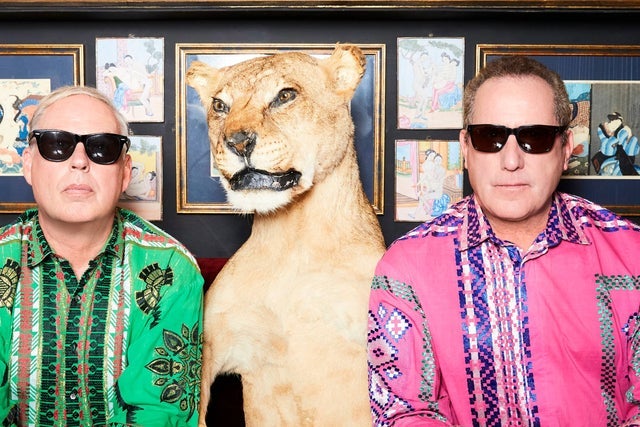
Hampton Court Palace Festival Presents OMD tickets are on sale right now.
Are Hampton Court Palace Festival Presents OMD tickets likely to be profitable in London?
There are 2 presales for this event - we have 1 unique password for these presales.

Ai Ticket Reselling Prediction
Sign Up to get artificial intelligence powered ticket reselling predictions!
Using artificial intelligence, concert attendance stats, and completed sales history for ticket prices on secondary market sites like Stubhub, we can predict whether this event is hot for resale. The Ai also considers factors like what music genre, and what market the concert is in.

Shazam is a music app that helps you identify the music playing around you. The more times an artist gets Shazamed, the higher this score will be, which should give you an idea of the popularity of this artist. Scores are ranked on a scale of 1 to 5. Learn more

Google Trends shows how popular a search query is for an artist. The more popular the artist is and the more people that are Googling them, the higher this score will be. Scores are ranked on a scale of 1 to 5. Learn more
Hampton Court Palace Festival Presents OMD at the Hampton Court, London
Presale Passwords & On Sale Times
Hampton Court Palace Festival Presents OMD
| Public Onsale | Nov 7 Fri 2025 | 10:00am | to | Jun 12 Fri 2026 | 5:30pm | |||
 Ticketmaster Presale Ticketmaster Presale |

|
Nov 6 Thu 2025 | 10:00am | to | Nov 7 Fri 2025 | 9:00am | ||
| Public Onsale | Nov 7 Fri 2025 | 12:00pm | to | Jun 12 Fri 2026 | 5:30pm | |||
| Ticketmaster Presale |
|
Nov 6 Thu 2025 | 12:00pm | to | Nov 7 Fri 2025 | 11:00am | ||
Tour Schedule
Hampton Court Palace Festival Presents OMD
26 similar events found
| Event Date | Event | Venue | Capacity | Location | Report |
|---|---|---|---|---|---|
| Jun 10 Wed • 2026 • 5:30pm | Hampton Court Palace Festival Presents David Gray | Hampton Court | London |  |
|
| Jun 11 Thu • 2026 • 5:30pm | Hampton Court Palace Festival Presents David Gray | Hampton Court | London | |
|
| Jun 11 Thu • 2026 • 6:00pm | Orchestral Manoeuvres in the Dark | Lincoln Castle |

|
Lincoln | |
| Jun 11 Thu • 2026 • 6:01pm | Orchestral Manoeuvres in the Dark - Ticket and Hotel Bundls | Lincoln Castle |
|
Lincoln | |
| Jun 12 Fri • 2026 • 5:30pm | Hampton Court Palace Festival Presents OMD | Hampton Court | London | |
|
| Pro Members see all 26 upcoming events on the tour schedule. | |||||
Watch on YouTube
Listen on iTunes
Wikipedia Bio
| Hampton Court Palace | |
|---|---|
 Hampton Court Palace, west front, Richmond upon Thames | |
  Location within London Borough of Richmond upon Thames | |
| General information | |
| Location | Hampton Court, Greater London, England |
| Coordinates | 51°24′12″N 0°20′15″W / 51.40333°N 0.33750°W / 51.40333; -0.33750 |
| Current tenants | Historic Royal Palaces |
| Owner | Charles III in right of the Crown[1] |
| Website | |
www | |
Listed Building – Grade I | |
| Official name | Hampton Court Palace |
| Designated | 2 September 1952; 73 years ago (1952-09-02) |
| Reference no. | 1193127 |
Hampton Court Palace is a Grade I listed[2] royal palace in the London Borough of Richmond upon Thames, 12 miles (19 kilometres) southwest and upstream of central London on the River Thames.
The building of the palace began in 1514 for Cardinal Thomas Wolsey, Archbishop of York and the chief minister of Henry VIII. In 1529, as Wolsey fell from favour, the cardinal gave the palace to the king to try to save his own life, which he knew was now in grave danger due to Henry VIII's deepening frustration and anger. The palace became one of Henry's most favoured residences; soon after acquiring it, he enlarged it to accommodate his sizeable retinue of courtiers.
In the early 1690s, William III's massive rebuilding and expansion work, which was intended to rival the Palace of Versailles, destroyed much of the Tudor palace.[3] His work ceased in 1694, leaving the palace in two distinct contrasting architectural styles, domestic Tudor and Baroque. While the palace's styles are an accident of fate, a unity exists due to the use of pink bricks and a symmetrical, if vague, balancing of successive low wings.[4] George II was the last monarch to reside in the palace.
The palace is a major tourist attraction open to the public. The structure and grounds are cared for by an independent charity, Historic Royal Palaces, which receives no funding from the Government or the Crown.[5] The palace displays many works of art from the Royal Collection. Apart from the palace itself and its gardens, other points of interest for visitors include the celebrated maze, the historic royal tennis court (see below), and a huge grape vine, the world's largest as of 2005[update]. The palace's Home Park is the site of the annual Hampton Court Palace Festival and Hampton Court Garden Festival.
- ^ "History". Historic Royal Palaces. Retrieved 22 July 2013.
- ^ Historic England (2 September 1952). "Hampton Court Palace (1193127)". National Heritage List for England. Retrieved 28 July 2020.
- ^ Dynes, p. 90.
- ^ Dynes, p. 86.
- ^ "Who we are". Historic Royal Palaces. Archived from the original on 1 September 2011. Retrieved 12 July 2011.
Source: Wikipedia