
Event research Kickin' Country Christmas
Kickin' Country Christmas tickets are on sale right now.
Are Kickin' Country Christmas tickets likely to be profitable in Black River Falls, WI?
There are 0 presales for this event.
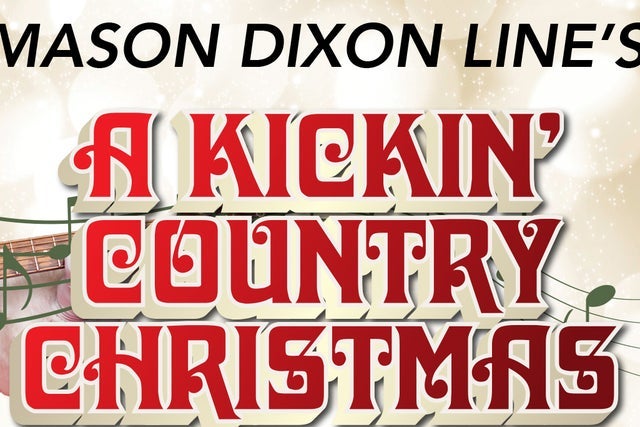
Kickin' Country Christmas
Ho-Chunk Gaming Black River Falls
Black River Falls, WI
Dec 19 Fri • 2025 • 7:00pm
Country and Folk
Ai Ticket Reselling Prediction
Sign Up to get artificial intelligence powered ticket reselling predictions!
Using artificial intelligence, concert attendance stats, and completed sales history for ticket prices on secondary market sites like Stubhub, we can predict whether this event is hot for resale. The Ai also considers factors like what music genre, and what market the concert is in.

Shazam is a music app that helps you identify the music playing around you. The more times an artist gets Shazamed, the higher this score will be, which should give you an idea of the popularity of this artist. Scores are ranked on a scale of 1 to 5. Learn more


Google Trends shows how popular a search query is for an artist. The more popular the artist is and the more people that are Googling them, the higher this score will be. Scores are ranked on a scale of 1 to 5. Learn more
Kickin' Country Christmas at the Ho-Chunk Gaming Black River Falls, Black River Falls, WI
Tour Schedule
Kickin' Country Christmas
0 similar events found
| Event Date | Event | Venue | Capacity | Location | Report |
|---|
Watch on YouTube
Listen on iTunes
Wikipedia Bio


The Mason–Dixon line, sometimes referred to as Mason and Dixon's Line, is a demarcation line separating four U.S. states: Pennsylvania, Maryland, Delaware and West Virginia. It was surveyed between 1763 and 1767 by English surveyors and astronomers Charles Mason and Jeremiah Dixon as part of the resolution to Cresap's War, a border conflict involving Maryland, Pennsylvania, and Delaware (then a part of Pennsylvania) in colonial America.[1]
The largest portion of the Mason–Dixon line, along the southern Pennsylvanian border, later became informally known as the boundary between the Southern slave states and Northern free states. This usage came to prominence during the debate around the Missouri Compromise of 1820, when drawing boundaries between slave and free territory,[2] and resurfaced during the American Civil War, with border states also coming into play. The Confederate States of America claimed the Virginian (now West Virginia) portion of the line as part of its northern border, although it never exercised meaningful control that far north – especially after West Virginia separated from Virginia and joined the Union as a separate state in 1863. It is still used today in the figurative sense of a line that separates the Northeast and South regionally, politically, and socially (see Dixie).
- ^ Sally M. Walker (2014). Boundaries: How the Mason–Dixon Line Settled a Family Feud and Divided a Nation. Candlewick Press. ISBN 978-0763670368.
- ^ "The Missouri Compromise of 1820 designated Mason and Dixon’s west line as the national divide between the 'free' and 'slave' states east of the Ohio River, and the line suddenly acquired new significance." Mackenzie, John. "A brief history of the Mason–Dixon Line". APEC/CANR, University of Delaware. Archived from the original on July 17, 2018. Retrieved January 5, 2017.
Source: Wikipedia