
Event research Pavillon 67 - Forfait souper et spectacle - Dinner and Show Package
Pavillon 67 - Forfait souper et spectacle - Dinner and Show Package tickets are on sale right now.
Are Pavillon 67 - Forfait souper et spectacle - Dinner and Show Package tickets likely to be profitable in Montreal, QC?
There are 0 presales for this event.
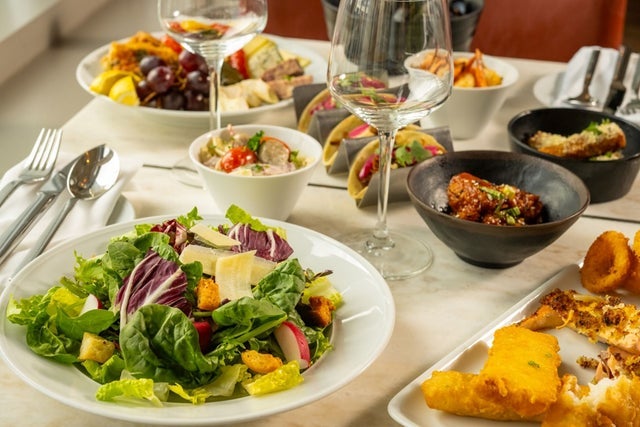
Pavillon 67 - Forfait souper et spectacle - Dinner and Show Package
CABARET DU CASINO DE MONTREAL
Montreal, QC
Mar 20 Fri • 2026 • 7:30pm
Food & Drink
Ai Ticket Reselling Prediction
Sign Up to get artificial intelligence powered ticket reselling predictions!
Using artificial intelligence, concert attendance stats, and completed sales history for ticket prices on secondary market sites like Stubhub, we can predict whether this event is hot for resale. The Ai also considers factors like what music genre, and what market the concert is in.

Shazam is a music app that helps you identify the music playing around you. The more times an artist gets Shazamed, the higher this score will be, which should give you an idea of the popularity of this artist. Scores are ranked on a scale of 1 to 5. Learn more

Google Trends shows how popular a search query is for an artist. The more popular the artist is and the more people that are Googling them, the higher this score will be. Scores are ranked on a scale of 1 to 5. Learn more
869
Capacity
Pavillon 67 - Forfait souper et spectacle - Dinner and Show Package at the CABARET DU CASINO DE MONTREAL, Montreal, QC
Tour Schedule
Pavillon 67 - Forfait souper et spectacle - Dinner and Show Package
38 similar events found
| Event Date | Event | Venue | Capacity | Location | Report |
|---|---|---|---|---|---|
| Apr 10 Fri • 2026 • 7:30pm | Pavillon 67 | CABARET DU CASINO DE MONTREAL |

|
Montreal, QC |  |
| Apr 11 Sat • 2026 • 7:30pm | Pavillon 67 | CABARET DU CASINO DE MONTREAL |
|
Montreal, QC | |
| Apr 17 Fri • 2026 • 7:30pm | Pavillon 67 | CABARET DU CASINO DE MONTREAL |
|
Montreal, QC | |
| Apr 18 Sat • 2026 • 7:30pm | Pavillon 67 | CABARET DU CASINO DE MONTREAL |
|
Montreal, QC | |
| Apr 19 Sun • 2026 • 7:30pm | Pavillon 67 | CABARET DU CASINO DE MONTREAL |
|
Montreal, QC | |
| Pro Members see all 38 upcoming events on the tour schedule. | |||||
Watch on YouTube
Listen on iTunes
Wikipedia Bio
.jpg)

The Pavillon de Flore (French pronunciation: [pavijɔ̃ d(ə) flɔʁ]), part of the Louvre Palace in Paris, France, stands at the southwest end of the Louvre, near the Pont Royal.[1] It was originally constructed in 1607–1610, during the reign of Henry IV, as the corner pavilion between the Tuileries Palace to the north and the Louvre's Grande Galerie to the east.[2][3] The pavilion was entirely redesigned and rebuilt by Hector-Martin Lefuel in 1864–1868 in a highly decorated Second Empire style. Arguably the most famous sculpture on the exterior of the Louvre, Jean-Baptiste Carpeaux's Triumph of Flora, was added below the central pediment of the south façade at this time.[4][2]: 85–86 The Tuileries Palace was burned by the Paris Commune in 1871, and a north façade, similar to the south façade, was added to the pavilion by Lefuel in 1874–1879.[2]: 91–93 Currently, the Pavillon de Flore is part of the Louvre Museum.
- ^ "Palais du Louvre". Structurae (in French). Retrieved 2007-12-19.
- ^ a b c Aulanier, Christiane (1971). Le Pavillon de Flore (PDF). Paris: Editions des Musées Nationaux.
- ^ Lübke, Wilhelm (1904). Outlines of the History of Art. Dodd, Mead, and company. p. 337.
pavillon de flore structure building history.
- ^ Bresc-Bautier, Geneviève (1995). The Louvre: An Architectural History. New York: The Vendome Press. pp. 129, 224. ISBN 978-0-8656-5963-6.
Source: Wikipedia