
Event research Boundaries
Boundaries tickets are on sale right now.
Are Boundaries tickets likely to be profitable in New Haven, CT?
There are 0 presales for this event.
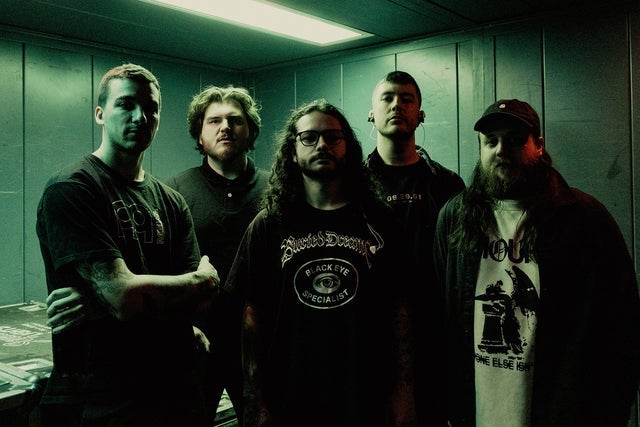
Boundaries
Toads Place - CT
New Haven, CT
Aug 24 Sun • 2025 • 6:30pm
Alternative Rock | Rock and Pop | Festivals | Rock | Hard Rock/Metal | Miscellaneous | Event | Metal
Ai Ticket Reselling Prediction
Sign Up to get artificial intelligence powered ticket reselling predictions!
Using artificial intelligence, concert attendance stats, and completed sales history for ticket prices on secondary market sites like Stubhub, we can predict whether this event is hot for resale. The Ai also considers factors like what music genre, and what market the concert is in.

Shazam is a music app that helps you identify the music playing around you. The more times an artist gets Shazamed, the higher this score will be, which should give you an idea of the popularity of this artist. Scores are ranked on a scale of 1 to 5. Learn more


Google Trends shows how popular a search query is for an artist. The more popular the artist is and the more people that are Googling them, the higher this score will be. Scores are ranked on a scale of 1 to 5. Learn more
750
Capacity
Boundaries at the Toads Place - CT, New Haven, CT
Tour Schedule
Boundaries
52 similar events found
| Event Date | Event | Venue | Capacity | Location | Report |
|---|---|---|---|---|---|
| Apr 12 Sun • 2026 • 6:30pm | The Amity Affliction w/ August Burns Red | Stage AE |
|
Pittsburgh, PA |  |
| Apr 14 Tue • 2026 • 6:30pm | August Burns Red & The Amity Affliction: The Springs Horizons Tour | The Fillmore Charlotte |
|
Charlotte, NC | |
| Apr 15 Wed • 2026 • 6:30pm | The Amity Affliction & August Burns Red: The Springs Horizons Tour | Tabernacle |
|
Atlanta, GA | |
| Apr 16 Thu • 2026 • 5:30pm | August Burns Red & The Amity Affliction: The Springs Horizons Tour | House of Blues Orlando |
|
Orlando, FL | |
| Apr 18 Sat • 2026 • 5:30pm | The Amity Affliction & August Burns Red: The Springs Horizons Tour | Fillmore New Orleans |
|
New Orleans, LA | |
| Pro Members see all 52 upcoming events on the tour schedule. | |||||
Watch on YouTube
Listen on iTunes
Wikipedia Bio

Planetary boundaries are a framework to describe limits to the impacts of human activities on the Earth system. Beyond these limits, the environment may not be able to continue to self-regulate. This would mean the Earth system would leave the period of stability of the Holocene, in which human society developed.[2][3][4]
These nine boundaries are climate change, ocean acidification, stratospheric ozone depletion, biogeochemical flows in the nitrogen cycle, excess global freshwater use, land system change, the erosion of biosphere integrity, chemical pollution, and atmospheric aerosol loading.
The framework is based on scientific evidence that human actions, especially those of industrialized societies since the Industrial Revolution, have become the main driver of global environmental change. According to the framework, "transgressing one or more planetary boundaries may be deleterious or even catastrophic due to the risk of crossing thresholds that will trigger non-linear, abrupt environmental change within continental-scale to planetary-scale systems."[2]
The normative component of the framework is that human societies have been able to thrive under the comparatively stable climatic and ecological conditions of the Holocene. To the extent that these Earth system process boundaries have not been crossed, they mark the "safe zone" for human societies on the planet.[3] Proponents of the planetary boundary framework propose returning to this environmental and climatic system; as opposed to human science and technology deliberately creating a more beneficial climate. The concept doesn't address how humans have massively altered ecological conditions to better suit themselves. The climatic and ecological Holocene this framework considers as a "safe zone" doesn't involve massive industrial farming. So this framework begs a reassessment of how to feed modern populations.
The concept has since become influential in the international community (e.g. United Nations Conference on Sustainable Development), including governments at all levels, international organizations, civil society and the scientific community.[5] The framework consists of nine global change processes. In 2009, according to Rockström and others, three boundaries were already crossed (biodiversity loss, climate change and nitrogen cycle), while others were in imminent danger of being crossed.[6]
In 2015, several of the scientists in the original group published an update, bringing in new co-authors and new model-based analysis. According to this update, four of the boundaries were crossed: climate change, loss of biosphere integrity, land-system change, altered biogeochemical cycles (phosphorus and nitrogen).[7] The scientists also changed the name of the boundary "Loss of biodiversity" to "Change in biosphere integrity" to emphasize that not only the number of species but also the functioning of the biosphere as a whole is important for Earth system stability. Similarly, the "Chemical pollution" boundary was renamed to "Introduction of novel entities", widening the scope to consider different kinds of human-generated materials that disrupt Earth system processes.
In 2022, based on the available literature, the introduction of novel entities was concluded to be the 5th transgressed planetary boundary.[8] Freshwater change was concluded to be the 6th transgressed planetary boundary in 2023[9] before ocean acidification was documented to be the 7th crossed limit in 2025[1].
- ^ a b Sakschewski, Boris; Caesar, Levke; Andersen, Lauren; Bechthold, Max; Bergfeld, Lotta; Beusen, Arthur; Billing, Maik; Bodirsky, Benjamin Leon; Botsyun, Svetlana (2025-09-24). Planetary Health Check 2025: A Scientific Assessment of the State of the Planet (Report). Potsdam Institute for Climate Impact Research (PIK). pp. 144 pages, 22 MB. doi:10.48485/pik.2025.017.
- ^ a b Rockström, Johan; Steffen, Will; Noone, Kevin; Persson, Åsa; Chapin, F. Stuart; Lambin, Eric F.; Lenton, Timothy M.; Scheffer, Marten; Folke, Carl; Schellnhuber, Hans Joachim; Nykvist, Björn (2009). "A safe operating space for humanity". Nature. 461 (7263): 472–475. Bibcode:2009Natur.461..472R. doi:10.1038/461472a. ISSN 0028-0836. PMID 19779433. S2CID 205049746.
- ^ a b Rockström, Johan; Steffen, Will; Noone, Kevin; Persson, Åsa; Chapin, F. Stuart III; Lambin, Eric; Lenton, Timothy M.; Scheffer, Marten; Folke, Carl; Schellnhuber, Hans Joachim; Nykvist, Björn (2009). "Planetary Boundaries: Exploring the Safe Operating Space for Humanity". Ecology and Society. 14 (2) art32. Bibcode:2009EcSoc..14Tr.32R. doi:10.5751/ES-03180-140232. hdl:10535/5421. ISSN 1708-3087. S2CID 15182169. art32.
- ^ Rockström, Johan; Gupta, Joyeeta; Qin, Dahe; Lade, Steven J.; Abrams, Jesse F.; Andersen, Lauren S.; Armstrong McKay, David I.; Bai, Xuemei; Bala, Govindasamy; Bunn, Stuart E.; Ciobanu, Daniel; DeClerck, Fabrice; Ebi, Kristie; Gifford, Lauren; Gordon, Christopher; Hasan, Syezlin; Kanie, Norichika; Lenton, Timothy M.; Loriani, Sina; Liverman, Diana M.; Mohamed, Awaz; Nakicenovic, Nebojsa; Obura, David; Ospina, Daniel; Prodani, Klaudia; Rammelt, Crelis; Sakschewski, Boris; Scholtens, Joeri; Stewart-Koster, Ben; Tharammal, Thejna; van Vuuren, Detlef; Verburg, Peter H.; Winkelmann, Ricarda; Zimm, Caroline; Bennett, Elena M.; Bringezu, Stefan; Broadgate, Wendy; Green, Pamela A.; Huang, Lei; Jacobson, Lisa; Ndehedehe, Christopher; Pedde, Simona; Rocha, Juan; Scheffer, Marten; Schulte-Uebbing, Lena; de Vries, Wim; Xiao, Cunde; Xu, Chi; Xu, Xinwu; Zafra-Calvo, Noelia; Zhang, Xin (2023). "Safe and just Earth system boundaries". Nature. 619 (7968): 102–111. Bibcode:2023Natur.619..102R. doi:10.1038/s41586-023-06083-8. PMC 10322705. PMID 37258676.
- ^ Cite error: The named reference
:6was invoked but never defined (see the help page). - ^ "Earth's boundaries?". Nature. 461 (7263): 447–448. 2009. Bibcode:2009Natur.461R.447.. doi:10.1038/461447b. ISSN 0028-0836. PMID 19779405. S2CID 29052784.
- ^ Cite error: The named reference
Cornell2015was invoked but never defined (see the help page). - ^ Cite error: The named reference
:0was invoked but never defined (see the help page). - ^ Richardson, Katherine; Steffen, Will; Lucht, Wolfgang (13 September 2023). "Earth beyond six of nine planetary boundaries". Science Advances. 9 (37) eadh2458. Bibcode:2023SciA....9H2458R. doi:10.1126/sciadv.adh2458. PMC 10499318. PMID 37703365. S2CID 261742678. eadh2458.
Source: Wikipedia