
Event research Badger
Badger tickets are on sale right now.
Are Badger tickets likely to be profitable in Margate?
There are 3 presales for this event - we have 2 unique passwords for these presales.
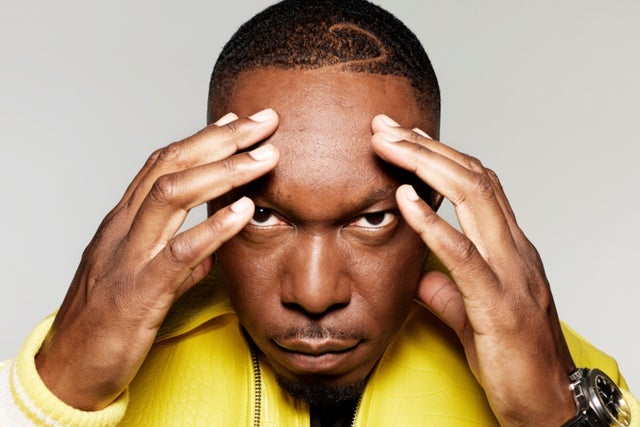
Badger
Olby's Soul Cafe
Margate
Aug 29 Fri • 2025 • 10:00pm
Rap and Hip-Hop | Dance/Electronic | Hip-Hop/Rap
Ai Ticket Reselling Prediction
Sign Up to get artificial intelligence powered ticket reselling predictions!
Using artificial intelligence, concert attendance stats, and completed sales history for ticket prices on secondary market sites like Stubhub, we can predict whether this event is hot for resale. The Ai also considers factors like what music genre, and what market the concert is in.


Shazam is a music app that helps you identify the music playing around you. The more times an artist gets Shazamed, the higher this score will be, which should give you an idea of the popularity of this artist. Scores are ranked on a scale of 1 to 5. Learn more

Google Trends shows how popular a search query is for an artist. The more popular the artist is and the more people that are Googling them, the higher this score will be. Scores are ranked on a scale of 1 to 5. Learn more
50
Capacity
Badger at the Olby's Soul Cafe, Margate
Presale Passwords & On Sale Times
Badger
| Public Onsale | Mar 26 Wed 2025 | 10:00am | to | Aug 29 Fri 2025 | 10:00pm | |||
| Public Onsale | Jun 27 Fri 2025 | 10:00am | to | Aug 29 Fri 2025 | 10:00pm | |||
 Live Nation Presale Live Nation Presale |

|
Jun 26 Thu 2025 | 10:00am | to | Jun 27 Fri 2025 | 9:00am | ||
 Ticketmaster Presale Ticketmaster Presale |
|
Jun 26 Thu 2025 | 10:00am | to | Jun 27 Fri 2025 | 9:00am | ||
 Promoter Presale Promoter Presale |
Jun 26 Thu 2025 | 10:00am | to | Jun 27 Fri 2025 | 9:00am | |||
Tour Schedule
Badger
0 similar events found
| Event Date | Event | Venue | Capacity | Location | Report |
|---|
Watch on YouTube
Listen on iTunes
Wikipedia Bio
| Badger | |
|---|---|

| |
| An American badger | |
Scientific classification
| |
| Kingdom: | Animalia |
| Phylum: | Chordata |
| Class: | Mammalia |
| Order: | Carnivora |
| Parvorder: | Mustelida |
| Superfamily: | Musteloidea |
| Groups included | |
| |

| |
| Mustelid badger ranges
Honey badger (Mellivora capensis)
American badger (Taxidea taxus)
European badger (Meles meles)
Asian badger (Meles leucurus)
Japanese badger (Meles anakuma)
Chinese ferret-badger (Melogale moschata)
Burmese ferret-badger (Melogale personata)
Javan ferret-badger (Melogale orientalis)
Bornean ferret-badger (Melogale everetti)
| |

Badgers are medium-sized short-legged omnivores in the superfamily Musteloidea. Badgers are a polyphyletic rather than a natural taxonomic grouping, being united by their squat bodies and adaptions for fossorial activity rather than by their ancestral relationships: Musteloidea contains several families, only two of which (the "weasel family" Mustelidae and the "skunk family" Mephitidae) include badgers; moreover, both of these families also include various other animals that are not badgers.
The fifteen species of mustelid badgers are grouped in four subfamilies: four species of Melinae (genera Meles and Arctonyx) including the European badger, five species of Helictidinae (genus Melogale) or ferret-badger, the honey badger or ratel Mellivorinae (genus Mellivora), and the American badger Taxideinae (genus Taxidea). Badgers include the most basal mustelids; the American badger is the most basal of all, followed successively by the ratel and the Melinae; the estimated split dates are about 17.8, 15.5 and 14.8 million years ago, respectively.[1]
The two species of Asiatic stink badgers of the genus Mydaus were formerly included within Melinae (and thus Mustelidae), but more recent genetic evidence indicates these are actually members of the skunk family (Mephitidae).[2]
Badger mandibular condyles connect to long cavities in their skulls, which gives resistance to jaw dislocation and increases their bite grip strength.[3] This in turn limits jaw movement to hinging open and shut, or sliding from side to side, but it does not hamper the twisting movement possible for the jaws of most mammals.
Badgers have rather short, wide bodies, with short legs for digging. They have elongated, weasel-like heads with small ears. Their tails vary in length depending on species; the stink badger has a very short tail, while the ferret-badger's tail can be 46–51 cm (18–20 in) long, depending on age. They have black faces with distinctive white markings, grey bodies with a light-coloured stripe from head to tail, and dark legs with light-coloured underbellies. They grow to around 90 cm (35 in) in length, including tail.
The European badger is one of the largest; the American badger, the hog badger, and the honey badger are generally a little smaller and lighter. Stink badgers are smaller still, and ferret-badgers are the smallest of all. They weigh around 9–11 kg (20–24 lb), while some Eurasian badgers weigh around 18 kg (40 lb).[4]
- ^ Cite error: The named reference
Law-2018was invoked but never defined (see the help page). - ^ Goswami, Anjali & Friscia, Anthony (2010). Carnivoran Evolution: New Views on Phylogeny, Form and Function. Cambridge University Press. p. 30. ISBN 978-0-521-73586-5.
- ^
 One or more of the preceding sentences incorporates text from a publication now in the public domain: Chisholm, Hugh, ed. (1911), "Badger", Encyclopædia Britannica, vol. 3 (11th ed.), Cambridge University Press, p. 188
- ^ "Badger Pages: Photos of and facts about the badgers of the world". Badgers.org.uk. Archived from the original on 5 February 2012. Retrieved 31 December 2011.

Source: Wikipedia