
Event research Christmas Rocks - Day 2
Christmas Rocks - Day 2 tickets are on sale right now.
Are Christmas Rocks - Day 2 tickets likely to be profitable in Newcastle Upon Tyne?
There is 1 presale for this event.
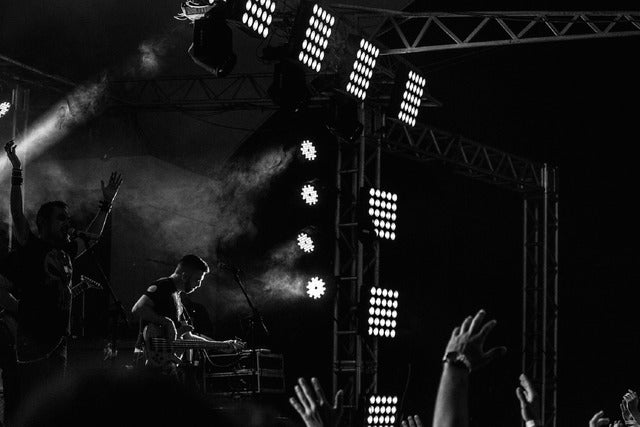
Christmas Rocks - Day 2
O2 City Hall Newcastle
Newcastle Upon Tyne
Dec 28 Sun • 2025 • 4:30pm
Rock | Undefined | More Concerts
Ai Ticket Reselling Prediction
Sign Up to get artificial intelligence powered ticket reselling predictions!
Using artificial intelligence, concert attendance stats, and completed sales history for ticket prices on secondary market sites like Stubhub, we can predict whether this event is hot for resale. The Ai also considers factors like what music genre, and what market the concert is in.

Shazam is a music app that helps you identify the music playing around you. The more times an artist gets Shazamed, the higher this score will be, which should give you an idea of the popularity of this artist. Scores are ranked on a scale of 1 to 5. Learn more

Google Trends shows how popular a search query is for an artist. The more popular the artist is and the more people that are Googling them, the higher this score will be. Scores are ranked on a scale of 1 to 5. Learn more
2,135
Capacity
Christmas Rocks - Day 2 at the O2 City Hall Newcastle, Newcastle Upon Tyne
 Priority from O2
Tour Schedule
Christmas Rocks - Day 2
9 similar events found
| Event Date | Event | Venue | Capacity | Location | Report |
|---|---|---|---|---|---|
| Sep 11 Fri • 2026 • 7:00pm | Wrong Jovi and Dream On | Cabaret Voltaire |

|
Edinburgh |  |
| Dec 27 Sun • 2026 • 4:30pm | Christmas Rocks - Day 1 | O2 City Hall Newcastle |
|
Newcastle Upon Tyne | |
| Dec 27 Sun • 2026 • 4:30pm | Christmas Rocks - 3 Day Ticket | O2 City Hall Newcastle |
|
Newcastle Upon Tyne | |
| Dec 27 Sun • 2026 • 4:30pm | Christmas Rocks - 2 Day Ticket | O2 City Hall Newcastle |
|
Newcastle Upon Tyne | |
| Dec 27 Sun • 2026 • 4:30pm | Christmas Rocks - 4 Day Ticket | O2 City Hall Newcastle |
|
Newcastle Upon Tyne | |
| Pro Members see all 9 upcoming events on the tour schedule. | |||||
Watch on YouTube
Listen on iTunes
Wikipedia Bio
.jpg)
A dream is a succession of images, dynamic scenes and situations, ideas, emotions, and sensations that usually occur involuntarily in the mind during certain stages of sleep.[1] Humans spend more than two hours dreaming per night,[2] and each dream lasts around 5–20 minutes.[3]
The content and function of dreams have been topics of scientific, philosophical and religious interest throughout recorded history. Dream interpretation, practiced by the Babylonians in the third millennium BCE[4] and even earlier by the ancient Sumerians,[5][6] figures prominently in religious texts in several traditions, and has played a lead role in psychotherapy.[7][8] Dreamwork is similar, but does not seek to conclude with definite meaning. The scientific study of dreams is called oneirology.[9] Most modern dream study focuses on the neurophysiology of dreams and on proposing and testing hypotheses regarding dream function. It is not known where in the brain dreams originate, if there is a single origin for dreams or if multiple regions of the brain are involved, or what the purpose of dreaming is for the body (or brain or mind).
The human dream experience and what to make of it has undergone sizable shifts over the course of history.[10][11] Long ago, according to writings from Mesopotamia and Ancient Egypt, dreams dictated post-dream behaviors to an extent that was sharply reduced in later millennia.[clarification needed] These ancient writings about dreams highlight visitation dreams, where a dream figure, usually a deity or a prominent forebear, commands the dreamer to take specific actions, and which may predict future events.[12][13][14] Framing the dream experience varies across cultures as well as through time.
Dreaming and sleep are intertwined. Dreams occur mainly in the rapid-eye movement (REM) stage of sleep—when brain activity is high and resembles that of being awake. Because REM sleep is detectable in many species, and because research suggests that all mammals experience REM,[15] linking dreams to REM sleep has led to conjectures that animals dream. However, humans dream during non-REM sleep, also, and not all REM awakenings elicit dream reports.[16] To be studied, a dream must first be reduced to a verbal report, which is an account of the subject's memory of the dream, not the subject's dream experience itself. Therefore, dreaming by non-humans is currently unprovable, as is dreaming by human fetuses and pre-verbal infants.[17]
- ^ The American Heritage Dictionary of the English Language (2016). "Dream" (5th ed.). Houghton Mifflin Harcourt Publishing Company. Retrieved 7 May 2009.
- ^ "Brain Basics: Understanding Sleep". National Institute of Neurological Disorders and Stroke. May 21, 2007. Archived from the original on 11 October 2007. Retrieved 16 December 2007.
Dreaming and REM Sleep We typically spend more than 2 hours each night dreaming.
- ^ Hannah Nichols; Thomas Johnson (May 16, 2025). "What does it mean when we dream?". medicalnewstoday. Archived from the original on 26 Sep 2025. Retrieved 4 May 2006.
- ^ Krippner, Stanley; Bogzaran, Fariba; Carvalho, Andre Percia de (2002). Extraordinary Dreams and How To Work with Them. Albany, NY: State University of New York Press. p. 9. ISBN 0-7914-5257-3.
Clay tablets have been found, dating to about 2500 B.C.E., that contain interpretive material for Babylonian and Assyrian dreamers.
- ^ Seligman, K (1948). Magic, Supernaturalism and Religion. New York: Random House.
- ^ Black, Jeremy; Green, Anthony (1992). Gods, Demons and Symbols of Ancient Mesopotamia: An Illustrated Dictionary. Austin: University of Texas Press. pp. 71–72, 89–90. ISBN 0714117056.
- ^ Freud, Sigmund (1965). James Strachey (ed.). The Interpretation of Dreams. Translated by James Strachey. New York: Avon.
- ^ Schredl, Michael; Bohusch, Claudia; Kahl, Johanna; Mader, Andrea; Somesan, Alexandra (2000). "The Use of Dreams in Psychotherapy". The Journal of Psychotherapy Practice and Research. 9 (2): 81–87.
- ^ Kavanau, J.L. (2000). "Sleep, memory maintenance, and mental disorders". Journal of Neuropsychiatry and Clinical Neurosciences. 12 (2): 199–208. doi:10.1176/jnp.12.2.199. ISSN 0895-0172. PMID 11001598.
- ^ Dodds, E. R. (1951). The Greeks and the Irrational. Berkeley: University of California Press. p. 105.
The Greeks never spoke as we do of having a dream, but always of seeing a dream....
- ^ Packer, Sharon (2002). Dreams in Myth, Medicine, and Movies. Westport, CT: Praeger Publishers. p. 85. ISBN 0-275-97243-7.
…[M]any more ancient cultures think that dreams are imposed by a force that resides outside the individual.
- ^ Macrobius (1952) [430]. Commentary on the Dream of Scipio. Translated by W. H. Stahl. New York: Columbia University Press. p. 90.
We call a dream oracular in which a parent, or a pious or revered man, or a priest, or even a god clearly reveals what will or will not transpire, and what action to take or to avoid.
- ^ Dodds (1951), referring to the type of dream described by Macrobius: "This last type is not, I think, at all common in our own dream-experience. But there is considerable evidence that dreams of this sort were familiar in antiquity." (p. 107).
- ^ Krippner, Stanley; Bogzaran, Fariba; Carvalho, André Percia de (2002). Extraordinary Dreams and How To Work with Them. Albany: State University of New York Press. p. 10. ISBN 0-7914-5257-3.
The Egyptian papyrus of Deral-Madineh was written about 1300 B.C.E. and gives instructions on how to obtain a dream message from a god.
- ^ Lesku, J. A.; Meyer, L. C. R.; Fuller, A.; Maloney, S. K.; Dell'Omo, G.; Vyssotski, A. L.; Rattenborg, N. C. (2011). "Ostriches sleep like platypuses". PLOS ONE. 6 (8): 1–7. Bibcode:2011PLoSO...623203L. doi:10.1371/journal.pone.0023203. PMC 3160860. PMID 21887239.
- ^ Solms, Mark (2000). "Dreaming and REM sleep are controlled by different brain mechanisms". Behavioral and Brain Sciences. 23 (6): 843–850. doi:10.1017/S0140525X00003988. PMID 11515144. S2CID 7264870.
Dreaming and REM sleep are incompletely correlated. Between 5 and 30% of REM awakenings do not elicit dream reports; and at least 5–10% of NREM awakenings do elicit dream reports that are indistinguishable from REM....
- ^ Bulkeley, Kelly (2008). Dreaming in the world's religions: A comparative history. NYU Press. p. 14. ISBN 978-0-8147-9956-7.
Do animals dream? We currently have no means of proving it one way or the other, just as we have no way to determine whether human fetuses and newborns are genuinely dreaming before they develop the ability to speak and relate their experiences.
Source: Wikipedia