
Event research To Kill A Mockingbird (Chicago)
To Kill A Mockingbird (Chicago) tickets are on sale right now.
Are To Kill A Mockingbird (Chicago) tickets likely to be profitable in Chicago, IL?
There are 2 presales for this event.
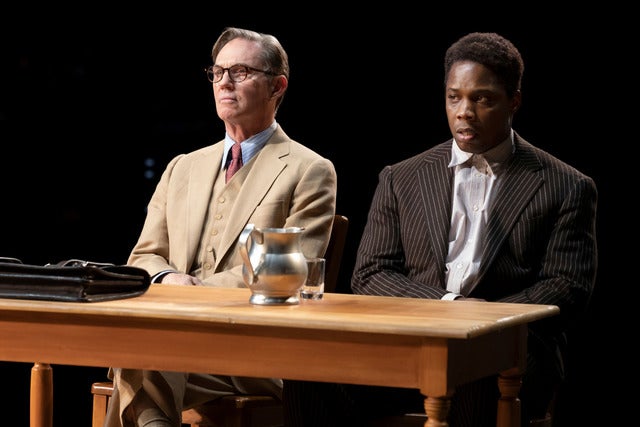
To Kill A Mockingbird (Chicago)
CIBC Theatre
Chicago, IL
Aug 10 Thu • 2023 • 7:30pm
Theatre | Alternative Rock | Rock and Pop | Lecture/Seminar | Comedy | Miscellaneous | Classical | Musicals | Dance/Electronic | Children's Music and Theater | More Concerts | Ballet and Dance | Plays | Movies | Opera | More Arts and Theater | Dinner Package | Cruise and Sightseeing
Ai Ticket Reselling Prediction
Sign Up to get artificial intelligence powered ticket reselling predictions!
Using artificial intelligence, concert attendance stats, and completed sales history for ticket prices on secondary market sites like Stubhub, we can predict whether this event is hot for resale. The Ai also considers factors like what music genre, and what market the concert is in.

Shazam is a music app that helps you identify the music playing around you. The more times an artist gets Shazamed, the higher this score will be, which should give you an idea of the popularity of this artist. Scores are ranked on a scale of 1 to 5. Learn more

Google Trends shows how popular a search query is for an artist. The more popular the artist is and the more people that are Googling them, the higher this score will be. Scores are ranked on a scale of 1 to 5. Learn more
2,020
Capacity
To Kill A Mockingbird (Chicago) at the CIBC Theatre, Chicago, IL
 Internet Pre-Sales
Tour Schedule
To Kill A Mockingbird (Chicago)
184 similar events found
| Event Date | Event | Venue | Capacity | Location | Report |
|---|---|---|---|---|---|
| Apr 5 Sun • 2026 • 1:00pm | Hamilton (Chicago) | CIBC Theatre |

|
Chicago, IL |  |
| Apr 5 Sun • 2026 • 1:00pm | The Wiz (Chicago) | James M. Nederlander Theatre |
|
Chicago, IL | |
| Apr 8 Wed • 2026 • 1:00pm | Hamilton (Chicago) | CIBC Theatre |
|
Chicago, IL | |
| Apr 8 Wed • 2026 • 7:00pm | Hamilton (Chicago) | CIBC Theatre |
|
Chicago, IL | |
| Apr 9 Thu • 2026 • 7:00pm | Hamilton (Chicago) | CIBC Theatre |
|
Chicago, IL | |
| Pro Members see all 184 upcoming events on the tour schedule. | |||||
Watch on YouTube
Listen on iTunes
Wikipedia Bio
.jpg) First edition cover – late printing | |
| Author | Harper Lee |
|---|---|
| Language | English |
| Genre | |
| Published | July 11, 1960 |
| Publisher | J. B. Lippincott & Co. |
| Publication place | United States |
| Pages | 281 |
To Kill a Mockingbird is a 1960 Southern Gothic novel by American author Harper Lee. It became instantly successful after its release; in the United States, it is widely read in high schools and middle schools.[1] To Kill a Mockingbird won the Pulitzer Prize a year after its release, and it has become a classic of modern American literature.[2] The plot and characters are loosely based on Lee's observations of her family, her neighbors and an event that occurred near her hometown of Monroeville, Alabama, in 1936, when she was ten.[3]
Despite dealing with the serious issues of rape and racial inequality, the novel is renowned for its warmth and humor. Atticus Finch, the narrator's father, has served as a moral hero for many readers and as a model of integrity for lawyers. The historian Joseph Crespino explains, "In the twentieth century, To Kill a Mockingbird is probably the most widely read book dealing with race in America, and its main character, Atticus Finch, the most enduring fictional image of racial heroism."[4] As a Southern Gothic novel and Bildungsroman, the primary themes of To Kill a Mockingbird involve racial injustice and the destruction of innocence. Scholars have noted that Lee also addresses issues of class, courage, compassion, and gender roles in the Deep South. Lessons from the book emphasize tolerance and decry prejudice.[5] Despite its themes, To Kill a Mockingbird has been subject to campaigns for removal from public classrooms, often challenged for its use of racial epithets. In 2006, British librarians ranked the book ahead of the Bible as one "every adult should read before they die".[6]
Reaction to the novel varied widely upon publication. Despite the number of copies sold and its widespread use in education, literary analysis of it is sparse. Author Mary McDonough Murphy, who collected individual impressions of To Kill a Mockingbird by several authors and public figures, calls the book "an astonishing phenomenon".[7] It was adapted into the 1962 Oscar-winning film of the same name by director Robert Mulligan, with a screenplay by Horton Foote. Since 1990, a play based on the novel has been performed annually in Harper Lee's hometown.
To Kill a Mockingbird was Lee's only published book until Go Set a Watchman, an earlier draft of To Kill a Mockingbird, was published on July 14, 2015. Lee continued to respond to her work's impact until her death in February 2016. She was very guarded about her personal life, and gave her last interview to a journalist in 1964.[8]
- ^ "Harper Lee: The Impact of 'To Kill a Mockingbird'". ABC News. Retrieved June 4, 2025.
- ^ "The Pulitzer Prizes- Harper Lee". www.pulitzer.org. Retrieved June 4, 2025.
- ^ "Was 'To Kill a Mockingbird' based on real events - DailyHistory.org". www.dailyhistory.org. Retrieved June 4, 2025.
- ^ Crespino, J. (2000). "The Strange Career of Atticus Finch". Southern Cultures. 6 (2): 9–30. doi:10.1353/scu.2000.0030. S2CID 143563131.
- ^ "Mockingbird 'dropped from GCSE exam'". BBC News. May 25, 2014. Retrieved July 11, 2020.
Steinbeck's six-chapter novella written in 1937 about displaced ranch workers during the Great Depression
- ^ Pauli, Michelle (March 2, 2006). "Harper Lee tops librarians' must-read list", Guardian Unlimited. Retrieved on February 13, 2008.
- ^ Zipp, Yvonne (July 7, 2010). "Scout, Atticus & Boo", The Christian Science Monitor. Retrieved on July 10, 2010.
- ^ Gale, Yvonne (November 17, 2014). "Book Conversations: Harper Lee's struggle with fame". The Fayetteville Observer. Retrieved October 13, 2024.
Source: Wikipedia